75HChord
Version:1.1.0
Published:2026-06-06
Introduction
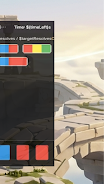
75HChord is a rhythm-puzzle game that turns chord structure into a tactile puzzle experience. In 75HChord a steady music river of four colored cells runs along the bottom of the screen to represent the root, third, fifth and seventh of a chord, while descending note blocks contain up to four colored sub-units that players must drag and drop into place. Each correctly aligned block clears and plays a short harmonious audio snippet, reinforcing both visual and aural recognition of harmonic relationships. The game is designed for short sessions and deeper practice, with fifty handcrafted levels that introduce new rules and ways of thinking about harmony.
Key features
The game visualizes chord tones with a four-cell river and uses color-based sub-units to represent individual chord notes. Immediate audio feedback accompanies each successful match so players learn to associate patterns with sound. The title includes progressive rule changes such as capo-like shifts that remap the music river, blocks that can only move horizontally, and sustain-style mechanics where notes must be held in place for a duration. Levels are handcrafted to introduce mechanics gradually and then combine them in later stages to increase complexity and encourage strategic thinking.
Gameplay mechanics and challenge systems
Gameplay centers on pattern recognition and spatial reasoning. Descending blocks arrive in a rhythmic flow and can contain between one and four colored sub-units; players drag those sub-units into the corresponding cells along the bottom. As levels progress, mechanics compound: some levels change the mapping of colors to chord degrees, others restrict movement directions, and sustain mechanics require timing as well as placement. These layered challenges create a puzzle progression that rewards both quick reflexes and a growing intuitive sense of harmony.
Controls and user experience
Controls are direct and tactile: touch-and-drag on mobile devices, and drag-and-drop with a mouse on desktop or emulator builds. The interface is kept intentionally minimal so focus stays on the river and the blocks. Audio cues are concise and musical rather than intrusive, allowing players to turn sound on for learning or off for quieter play. The pacing and input responsiveness were designed to make each interaction feel immediate so that matching becomes a satisfying, almost musical action.
Progression, levels, and learning curve
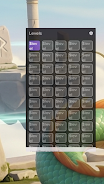
The fifty levels are arranged to teach through play. Early levels introduce single-mechanic puzzles to build familiarity with basic chord relationships. Mid-game levels introduce capos and movement restrictions that require rethinking earlier habits, while late-game puzzles combine multiple rulesets and require sustained focus to resolve. This deliberate ramp gives players a clear sense of advancement and meaningful milestones, with each new mechanic presented in a stage where it can be learned before being mixed into harder combinations.
Visual style and audio design
The visual approach is clean and instructional: a limited palette of colors, clear geometric sub-units, and an uncluttered HUD that keeps attention on musical relationships. Animations are subtle and serve to communicate state changes, such as a short glow when a block clears. The audio snippets for correct matches are short, consonant harmonies that reinforce why a given alignment is musically satisfying. Together the visuals and sound create an accessible environment for both players familiar with music theory and newcomers who learn by doing.
Accessibility, settings, and customization
Recognizing the reliance on color for core mechanics, the game offers visual options designed to aid players with color vision differences and other needs. Alternative palettes with improved contrast and optional shape overlays help distinguish sub-units when color alone is insufficient. Players can also adjust audio feedback levels or mute musical snippets while keeping visual confirmation active. These settings aim to broaden accessibility without altering the fundamental puzzle rules.
Replay value and offline play
Replay value comes from mastery rather than randomized scoring: revisiting levels to solve them under new constraints or to refine timing and placement offers long-term engagement. The handcrafted nature of each level encourages players to learn the musical logic behind patterns instead of relying on memorization alone. 75HChord is fully playable offline, making it suitable for travel or practice without an internet connection, and its short-level format supports casual play sessions alongside deeper runs aimed at tighter execution.
Whether you approach 75HChord as a musician wanting a fresh way to practice harmonic recognition or as a puzzle player seeking a rhythmic, tactile challenge, the game blends musical thinking with straightforward puzzle interaction to create an experience that is both educational and entertaining.
Show More