Fembot Vending Machine
Version:0.1
Published:2026-07-18
Introduction
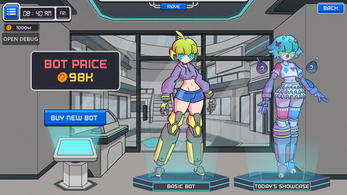
Fembot Vending Machine is an idle management sim that puts you in charge of a growing roster of service robots, combining purchase-and-upgrade economics with a parts-driven customization workflow. From the first few minutes you buy basic units and slot them into jobs, the app presents a steady loop of acquisition, assignment and reinvestment that rewards planning over reflexes. The description below explains how the systems interlock, what players can expect from controls and progression, and how optional mature themes are handled in a neutral, consent-driven way.
Key features and core loop
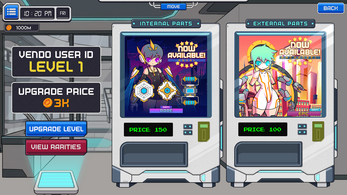
The central gameplay loop emphasizes three actions: buy, assign, and upgrade. Players visit a unified Bot Shop to acquire new units and components, place bots into job slots to generate income, and return to the Workshop to install internal modules or external shells. Internal parts alter core statistics such as speed, efficiency and stamina, while external parts primarily provide cosmetic variation and small secondary bonuses. A pawn option lets you liquidate surplus items to recover funds quickly without disrupting long-term plans. Research trees gradually unlock higher-paying jobs and more advanced parts, creating an accessible but meaningful sense of growth.
Gameplay mechanics and progression
Progression in Fembot Vending Machine favors optimization and matching over twitch skill. Each available job lists preferred statistics, and the challenge is assembling internal parts that satisfy those requirements efficiently. Early stages focus on earning enough gold to unlock essential modules; mid-game introduces deeper combinations and branching research paths; late-game encourages fine-tuning part synergies and tackling premium job types. The design supports both short micro-sessions and longer optimization runs by providing clear intermediate goals alongside longer-term research milestones.
Controls and user experience
The interface is designed for quick, tap-centered sessions with optional drag-and-drop assignment for users who prefer a tactile workflow. Tap a bot to open a detail panel showing stat readouts, equipped parts and current tasks; tap parts in the Workshop to equip them and use drag gestures to place bots into job slots when desired. Tooltips provide concise explanations of part effects and job requirements, and sortable inventories make it straightforward to find the right component when you need it. Controls are intentionally simple so management decisions, not menu navigation, drive the experience.
Customization, workshop and visual style
Customization is split between performance and appearance so players can pursue optimization without sacrificing visual identity. Internal modules change a bot’s core attributes—affecting how well a unit performs specific task categories—while external components change looks and provide modest stat tweaks. The art direction favors a clean retro-futuristic aesthetic with crisp icons, legible typography and uncluttered panels that keep focus on decisions rather than flashy effects. This visual clarity supports long sessions where readability and quick recognition are more valuable than high-end graphics.
Level structure, challenges and replay value
Instead of discrete stages, levels are organized around job tiers and research checkpoints that scale as you progress. Optional challenge milestones encourage experimentation by rewarding players who meet specific build goals or complete targeted research trees. Replay value comes from trying alternate strategies—such as specializing a stable of high-efficiency bots, focusing on a narrow set of lucrative jobs, or collecting cosmetic external parts for variety—so subsequent playthroughs feel materially different without introducing new core systems.
Accessibility, offline play and settings
Accessibility features include adjustable text sizes, color-contrast options and icon-based metadata so players with differing needs can interpret stats and inventories more easily. Idle mechanics include offline earnings, allowing progress to continue when the app is closed and making returns to the game feel rewarding even after short breaks. Additional settings allow toggling auto-assign behavior, controlling resource notifications and isolating mature material behind an explicit opt-in gate, ensuring the default experience remains family-neutral while consenting adults may access optional content.
Challenge systems and balance
Challenges are introduced through research barriers and job requirements rather than sudden difficulty spikes. Players manage risk by balancing investment in research against expanding their bot fleet, and the game provides readable feedback when a bot is mismatched to a job so players can iterate without frustration. Balance aims to keep progression deliberate rather than punishing, rewarding thoughtful part combinations and strategic purchases over grinding repetitive tasks indefinitely.
Experience and considerations
Fembot Vending Machine delivers a calm, strategy-first management experience that is well suited to players who enjoy incremental progression and optimization puzzles. Sessions can be short and satisfying or extended into longer planning runs, and the neutral presentation of optional mature themes is clearly labeled and gated to respect different comfort levels. For anyone interested in methodical systems design, modular customization and a tidy, readable interface, the title offers a consistent management loop with meaningful long-term goals.
Show More