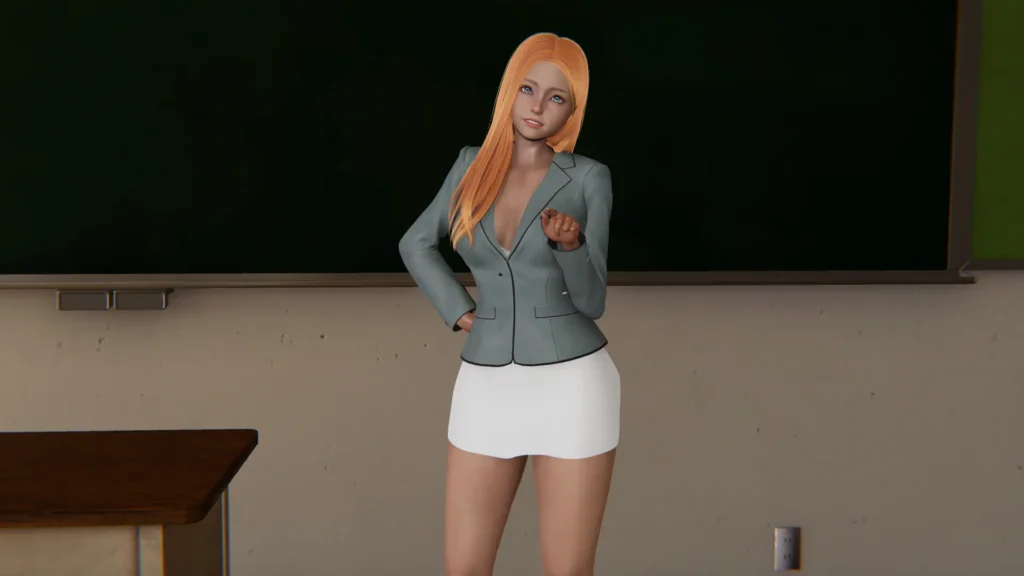
Classroom Affairs
Version:0.3
Published:2026-07-23
Introduction
Classroom Affairs introduces players to a tense, character-driven narrative set in a contemporary adult learning environment where every choice carries weight. In Classroom Affairs you play as a participant who has unexpectedly moved into shared housing and enrolled in an intensive study program that offers one final opportunity to turn around a poor academic record. The game focuses on interpersonal dynamics with fellow adult participants, including a close peer named Anya, and asks players to balance coursework, social life, and moral choices as the story unfolds.
Core gameplay and controls
The experience centers on branching dialogue and decision points rather than fast-paced action. Controls are simple and touch-friendly: tap to advance dialogue, choose from contextual response options, and use an on-screen menu to save or load your progress. Many scenes include timed choices to create pressure during critical moments, while other encounters let you take more time to explore relationship paths. The pacing rewards players who think strategically about when to focus on studies and when to invest in social interactions.
Progression and challenge systems
Progress is driven by a combination of academic standing, interpersonal rapport, and story flags that track the consequences of your decisions. Completing study-related tasks raises your program standing and opens up new segments of the narrative, while prioritizing social options builds relationships and unlocks alternate scenes. A visible progress indicator helps you see how close you are to securing the “one last chance” milestone, and the game contains multiple endings that reflect different balances of academic success and personal connections.
Visual style and presentation
Classroom Affairs emphasizes character portraits, expressive background art, and a clean user interface to keep attention on the story. The art direction favors soft, realistic illustrations and mood lighting to support intimate conversations without explicit imagery. Scene transitions are designed to feel cinematic, with careful attention to dialogue pacing and presentation so that players remain immersed in the narrative flow.
Customization and player choice
While not focused on extensive avatar customization, the game lets you shape your character through choices that affect dialogue tone, priorities, and relationship behavior. Decision trees allow you to adopt different approaches — for example, a studious path that sacrifices social time for better grades, or a socially-oriented path that deepens connections but increases academic risk. These meaningful choices influence how NPCs react and which story branches become available.
Replay value and structure
The branching nature of Classroom Affairs encourages replay to explore alternate outcomes and character arcs. Early chapters establish your core status and available relationships, while mid-game chapters expand the range of choices and late-game chapters resolve the major consequences of your earlier actions. Because different decisions unlock unique scenes and endings, players can return to earlier save points to test new strategies and uncover hidden material.
User experience and accessibility
Designed to be approachable for a wide audience, the game includes adjustable text speed, an auto-advance option for hands-free reading, and a readable font size with high-contrast UI elements for clarity. Multiple save slots allow experimentation without losing progress, and an options menu lets you tailor audio levels and subtitle preferences. The interface is optimized for offline play so the core story can be experienced without a persistent internet connection.
Development and current release
Classroom Affairs is an early project from indie developer SerivaStudios Games. The current release is version 0.3, an early playable build that showcases the main narrative structure and decision mechanics. The developer welcomes feedback and plans to refine pacing, expand scenes, and polish visuals in future updates. Known limitations in this build include a smaller scope and some rough edges, but players interested in character-driven, choice-focused storytelling will find a strong foundation and clear potential for growth.
Show More