After the Worst
Version:0.01
Published:2026-07-30
Introduction
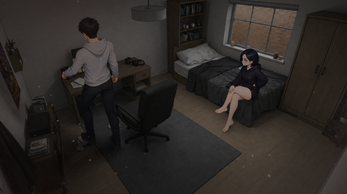
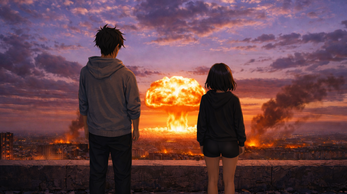
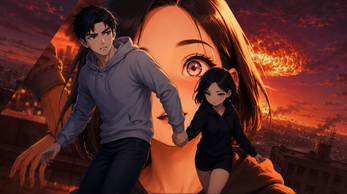
After the Worst is a story-driven post-apocalyptic visual novel that places players in a collapsing city after a series of mysterious explosions, following Roman and his roommate Sofia as they cooperate, scavenge scarce supplies and make difficult survival choices that shape trust, intimacy and later consequences. The game balances deliberate pacing with tense moments of scarcity: timed decisions, limited resources and evolving relationship mechanics guide the narrative rather than fast-paced action, so players who prefer character drama and moral complexity will find this title most rewarding.
Gameplay and mechanics
The core of the experience is choice-based storytelling paired with light survival systems. Players navigate a sequence of scenes where decisions influence immediate safety, available supplies and the developing bond between the two protagonists. Timed prompts increase pressure in dangerous situations, while scavenging segments require prioritizing food, medicine and tools—choices that can close off or open new dialogue options and narrative branches. Relationship meters track trust and intimacy in measurable ways that affect later scenes and possible endings, creating meaningful trade-offs between short-term survival and long-term alliances.
Controls and interface
The interface is optimized for touch devices: tap to advance text, use on-screen choice buttons to select actions, and long-press to review recent dialogue or important items. Simple icons and contextual prompts make scavenging and resource selection quick without breaking immersion. Adjustable text speed and an optional auto-mode help players tailor pacing to their reading preference. The UI keeps essential information — inventory levels, relationship status and pending timers — visible so decisions are informed and the experience remains approachable for newcomers to visual novels.
Progression and replay value
Progress unfolds across discrete chapters; the public build introduces the opening acts and core mechanics while later chapters expand available locations and consequences. Because choices can lock or unlock scenes and influence character behavior, the story supports multiple narrative paths and endings. Players are encouraged to replay with different survival strategies and relationship choices to discover alternate outcomes, hidden dialogue, and scenes that only appear when certain trust thresholds or resource conditions are met.
Visual style and presentation
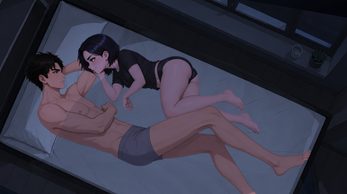
The visual approach mixes comic-style panel compositions with traditional visual novel layouts to emphasize mood and pacing. Intimate two-character scenes use close framing and dialogue-driven art, while exploration sequences expand into layered background panels that suggest broader city decay. Lighting, color palette and pacing of panels work together to create an atmospheric experience; sound design complements visuals with ambient effects and understated music that underscore tension without overwhelming the story.
Level structure and challenge systems
Rather than levels in the action-game sense, the experience is organized into interconnected scenes and chapters that act as encounter points for narrative and survival decisions. Challenge comes from resource scarcity, timed choices and moral dilemmas rather than combat: players weigh the immediate need for supplies against long-term relational consequences, and those trade-offs create emergent difficulty that shifts depending on play style. This structure encourages careful consideration and occasional risk-taking to test different approaches.
Customization and accessibility
Accessibility options are built into the settings to make the story approachable: adjustable text size, contrast and text speed are available, and toggles allow players to moderate how mature themes are presented. Controls can be simplified for users who prefer steady reading, and the interface avoids mandatory quick reactions whenever possible so players with different needs can still engage with the narrative. These options support a wide range of players while preserving the intended emotional beats of the story.
Offline play and performance
The game is designed as a single-player, offline experience: after installation, the narrative and core mechanics are playable without a persistent internet connection. The build has been optimized for phones and tablets to run smoothly across a broad range of hardware; performance expectations and storage requirements are kept modest so the story is accessible on most contemporary devices.
Early access and version information
The public build available now is v0.01, which presents the opening chapter, the initial survival mechanics and the central relationship between Roman and Sofia. Supporters currently have access to a v0.02 build with additional scenes and refinements; ongoing development will expand the city, deepen character arcs and introduce more branching content. The developer roadmap emphasizes iterative updates based on player feedback and careful expansion of the narrative systems used in After the Worst.
Notes for players
If you enjoy slow-burn character drama, tough moral choices and atmospheric exploration, After the Worst offers a focused two-character narrative with meaningful consequences and replayability. The title aims to deliver a narrative-first experience where survival decisions carry emotional weight and where multiple playthroughs reveal different shades of the story.
Show More