Raid Rush
Version:1.347
Published:2026-08-04
Introduction
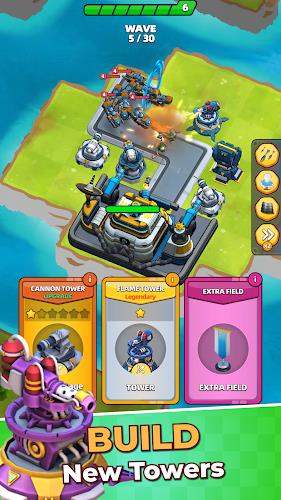
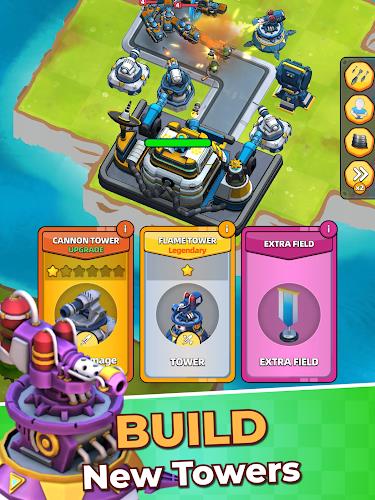
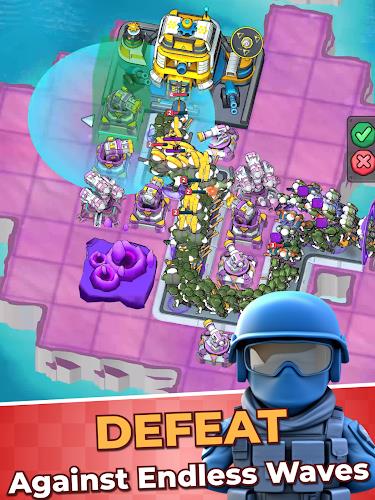
Raid Rush is a tactical tower defense game that blends card-driven deckbuilding with lane-based placement and unit merging to create a fast, decision-focused experience. In Raid Rush you construct a deck of tower cards, draw and play those cards during waves of enemies, use path cards to manipulate where foes travel, and merge duplicate towers to evolve stronger defenses; the result is a mix of planning and on-the-fly adaptation across chapters packed with bosses and varied enemy types.
Gameplay and controls
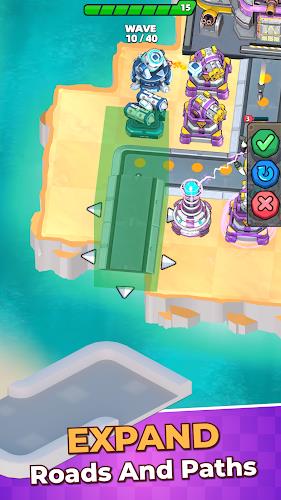
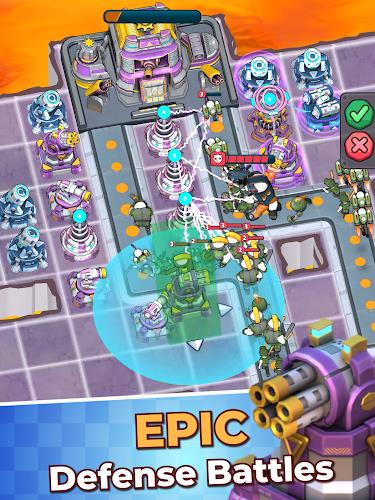
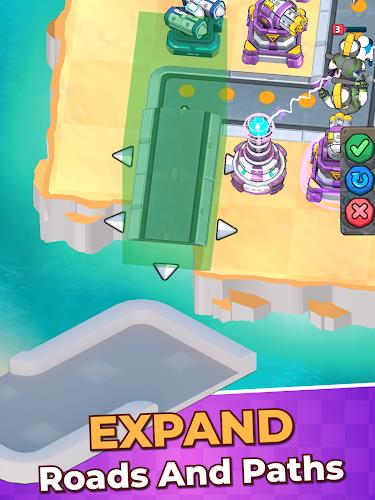
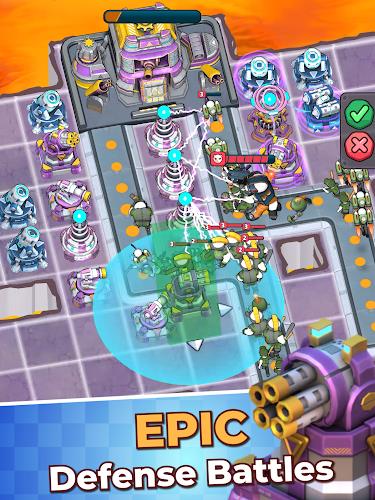
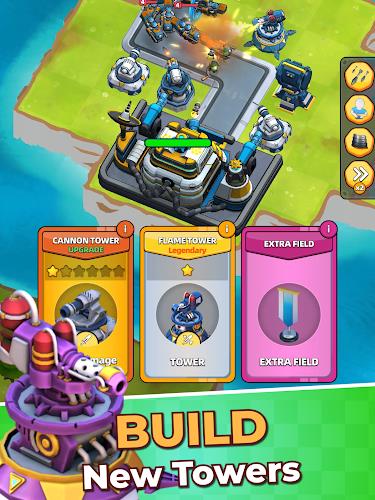
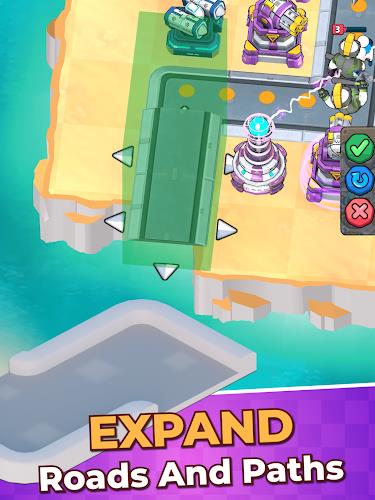
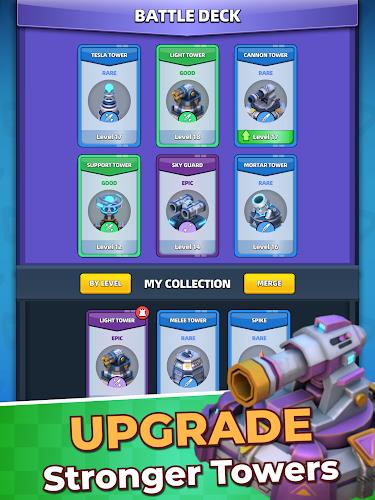
The core loop centers on building a flexible deck before battle and reacting to card draws while a wave is in progress. You place towers on defined lanes with simple tap-and-drag controls, select path cards to redirect or split routes, and merge towers by bringing matching cards together. The interface is optimized for touch: intuitive drag gestures, clear on-screen indicators for placement and merge options, and contextual menus for quick upgrades. A short in-game tutorial introduces placement, path control, and merging mechanics so new players can jump into early chapters without confusion.
Progression and customization
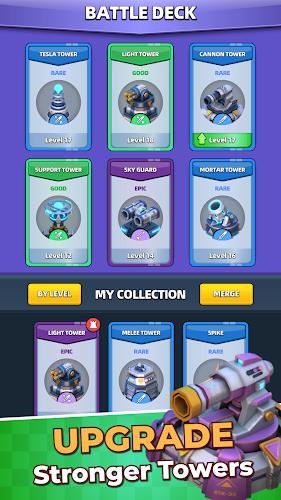
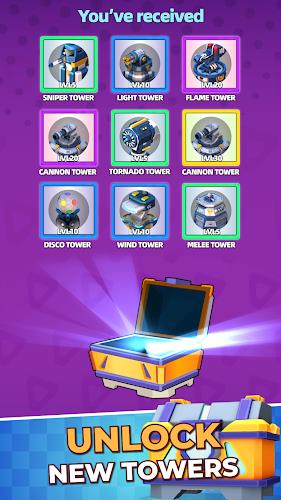
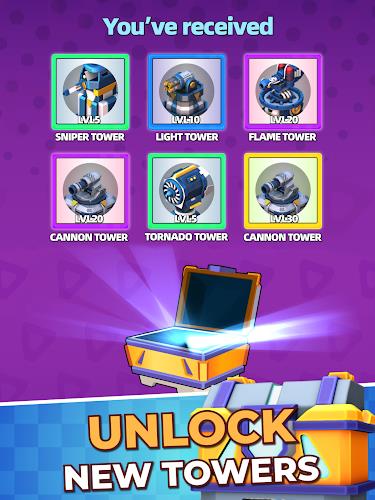
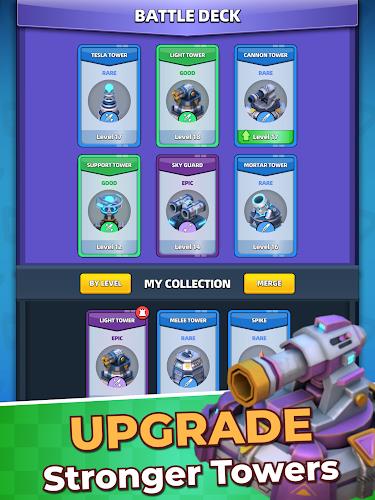
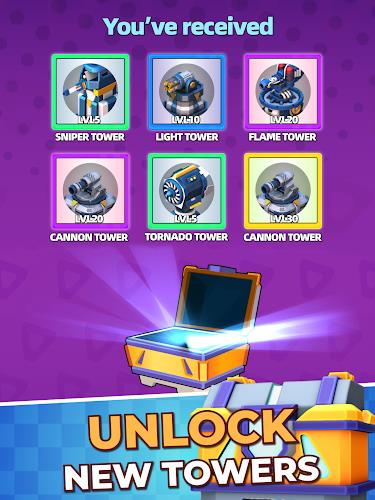
Progression is driven by hero growth, tower upgrades, and an expanding card pool. Heroes gain levels and unlock passive bonuses that change how towers perform or how cards draw, while towers can be upgraded or merged to enhance stats and add new effects. Customization comes from assembling a deck with towers and path cards that suit your strategy: defensive choke points, rapid-fire lanes, or specialized anti-air configurations. Limited-time collaboration towers and guardian units appear during events and offer temporary ways to experiment with new synergies.
Level structure and challenge systems
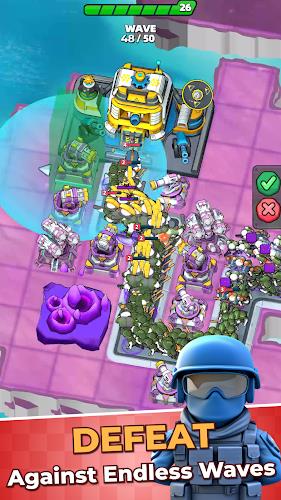
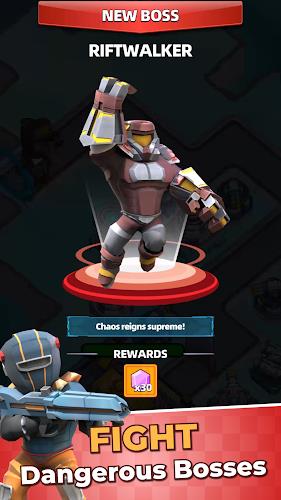
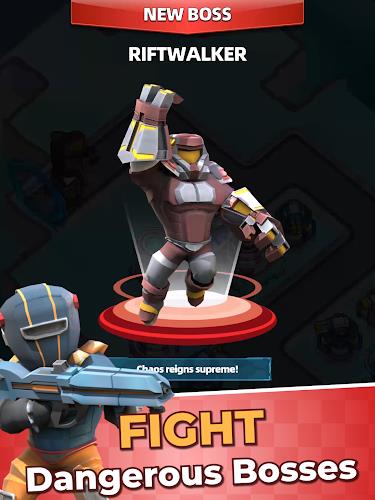
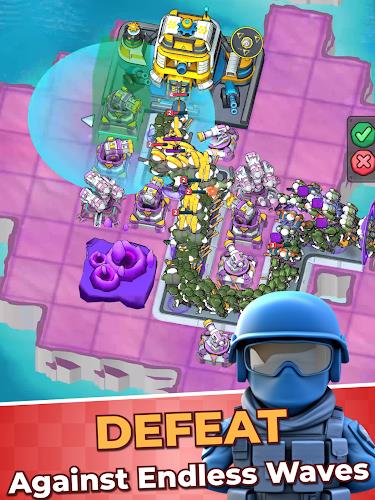
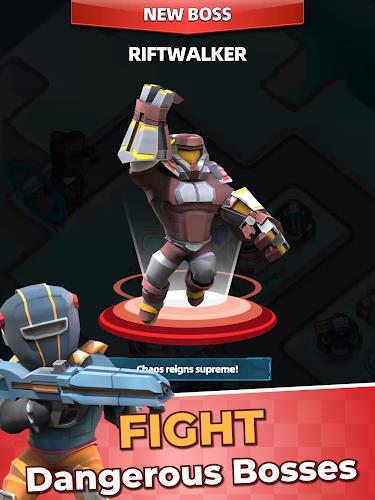
Raid Rush is organized into chapters and arenas that introduce new terrain, enemy behaviors, and boss encounters. Levels include a mix of ground and air units, environmental hazards, and route layouts that reward careful placement and thoughtful use of path cards. A difficulty ramp provides challenge options for players seeking tighter tactical puzzles, and rotating events introduce modifiers and time-limited scenarios to test specific strategies. Randomized card draws increase replay value by forcing you to adapt rather than rely on a single dominant build.
Visual style and performance
The visual presentation balances readable clarity with lively effects: towers and enemies are distinct at a glance, while impact animations and particle effects communicate when merges or upgrades trigger. Graphics settings are tuned for a wide range of Android devices so gameplay remains smooth on mid-range hardware; the game includes options to reduce visual detail for improved battery life and consistent frame rates during longer sessions.
Replay value and user experience
Replayability comes from a combination of deck diversity, chapter design, and the unpredictability of card draws. Each playthrough encourages experimentation with different tower combinations and hero talents, and short sessions are accessible thanks to clear level objectives and concise wave pacing. The UI focuses on clarity: readable tooltips, concise upgrade descriptions, and visual cues for merge opportunities make the decision process transparent rather than opaque.
Accessibility and offline play
Raid Rush includes accessibility-minded touches such as adjustable text sizes, contrast-friendly icons, and a paced tutorial to lower the barrier for new players. The single-player chapters can be enjoyed offline, enabling practice and progression without a constant network connection; event-based features and time-limited content function when online, but core campaign play remains available for offline sessions.
Development, events and support
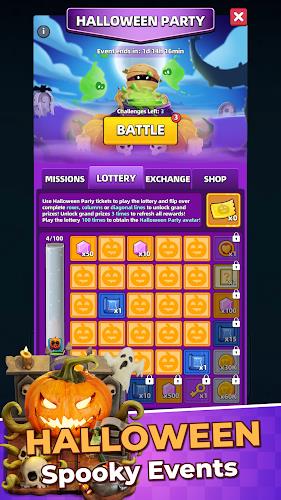
Developed by Panteon Games, Raid Rush receives periodic updates that introduce new chapters, tower types, and temporary collaborations. These updates are accompanied by in-game events and challenge periods where players can try exclusive towers or event-specific modifiers. The development team focuses on balancing deck options and refining chapter design so each update broadens tactical choices while keeping the learning curve approachable for casual and experienced players alike.
Show More