Tongits Offline
Version:2.2.0
Published:2026-08-05
Introduction
Tongits Offline brings a faithful and approachable take on the traditional Filipino three-player rummy to mobile devices, and Tongits Offline is built specifically for uninterrupted practice when you do not have internet access. This editor introduction explains how the game models draw, meld and discard turns, how its AI opponents simulate different human play styles, and how the app focuses on teaching the Pangasinan tradition known as Tung-it in a clear, learnable format suitable for newcomers and experienced players alike.
Core gameplay mechanics
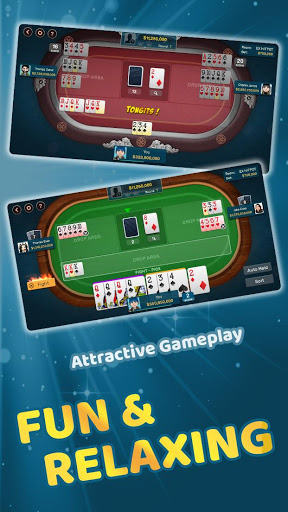
The game centers on classic draw-and-discard rounds where the objective is to empty your hand or minimize unmatched card points when a round ends. Players form melds of sets and runs while deciding the optimal moment to close a round. The simulation emphasizes hand management, timing and reading table state: when to push for a Tongits win, when to conserve cards, and how to react when the central stack runs low. Virtual opponents present consistent but varied behaviors so each match requires a mixture of planning and adaptive tactics.
AI opponents and level structure
AI difficulty is adjustable across several tiers, allowing practice matches that scale with your skill. Early levels focus on basic mechanics and safe decisions, while higher tiers introduce opponents who close aggressively, feint with discards or prioritize meld building. Structured matches are grouped into short sessions and scenario-based puzzles that recreate common late-game states, encouraging targeted practice of closing decisions and penalty minimization. This level structure helps players progress in defined steps without introducing online leaderboards or multiplayer elements.
Controls and in-game guidance
Controls are optimized for touch devices: tap a card to select it, drag or tap to discard, and use long-press for quick hints about legal melds. Context-sensitive buttons guide available moves and a step-through tutorial covers the first few rounds with example plays so beginners can follow along. Hints are optional and can be toggled to create a more challenging learning environment; the interface also highlights legal melds and suggests closing opportunities when enabled to speed up the learning curve.
Progression, challenges and replay value
Progression is built around practice goals and a set of escalating challenge scenarios that focus on endgame thinking. Completing challenges unlocks tougher AI settings and additional scenario puzzles that test specific situations, such as low-stack finishes or hands where careful discard choice is critical. Replay value comes from randomized deals, varied opponent styles, and a broad set of puzzles that encourage repeated practice; since each hand plays differently, mastery grows through repetition rather than predictable scripted encounters.
Visual style and customization
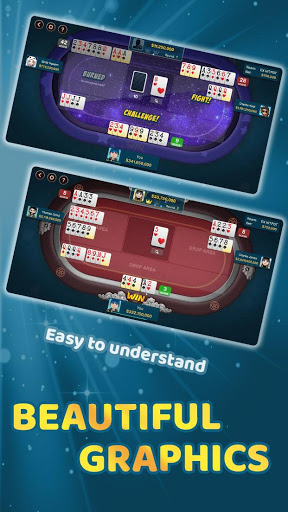
The presentation favors clarity: clean card faces, readable suits and a neutral tabletop reduce eye strain during long sessions. Customization options let you switch card backs, adjust table color and control animation speed so the look and feel match personal preference. Subtle sound cues and minimal animations provide useful feedback without distraction, and all visual or audio elements can be muted or toned down in the settings.
Accessibility and usability
Accessibility is addressed with high-contrast card design options, adjustable text sizes and a layout that scales well across phones and tablets. Color choices and iconography are chosen to be distinguishable under different lighting conditions, and tutorials include repeated examples so new players can absorb rules at their own pace. The interface aims for low friction: clear prompts explain scoring, allowed melds and the mechanics of closing at the moment you need them rather than buried in menus.
Offline experience and practical learning
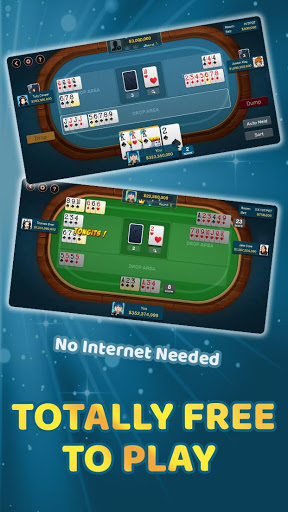
Because everything runs without a network connection, Tongits Offline makes it easy to practice during travel or in places with limited connectivity, and the challenge set replicates realistic board states to teach multi-move planning. These offline puzzles are designed to mirror common mistakes and successful strategies from casual home games, helping you internalize when to close, when to hold back and how to reduce penalty points when a clean finish isn't possible.
User support and ongoing improvements
User experience is prioritized through steady usability updates and bug fixes rather than adding online features. An accessible help section and in-game rule summary are available at any time for reference, and the app aims to remain lightweight and dependable so players can focus on learning and enjoying the traditional card game without distractions.
Show More