Shroom Guard
Version:1.6.25
Published:2026-08-06
Introduction
Shroom Guard places you in a bewitching Mushroom Kingdom under siege, assigning you the towering role of a guardian who must defend fungal settlements from waves of invading heroes and creatures. In Shroom Guard you combine light merge mechanics with tower defense positioning to build a resilient line of quirky monsters; each decision during placement and fusion changes how a wave plays out which keeps encounters engaging throughout a session. This introduction outlines what to expect from the gameplay, control scheme, progression, visual approach, level design, and accessibility so you can decide whether the game fits your play style.
Gameplay mechanics
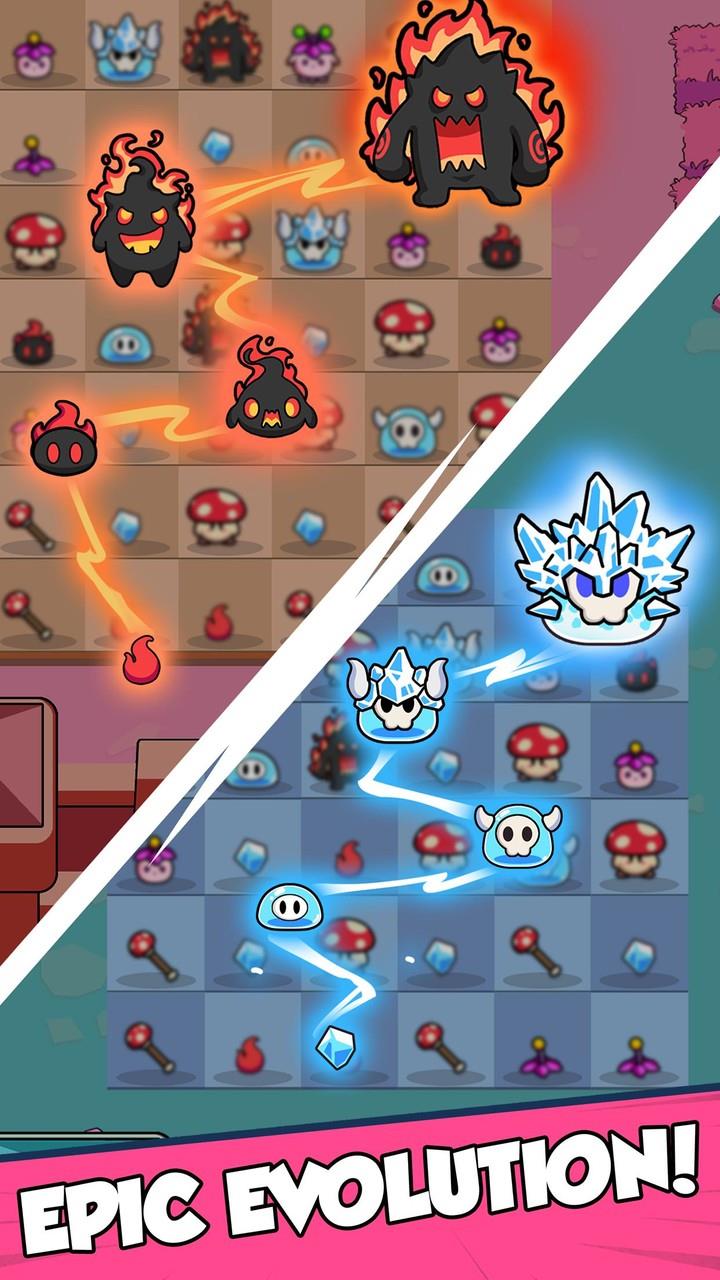
The core loop in Shroom Guard centers on merging and deployment. You collect low-tier monster units, fuse identical units to create stronger guardians, and place the resulting creatures along defensive lanes to intercept advancing enemies. Combat happens in real time so placement and the timing of merges matter: a hasty fuse may leave a lane understaffed, while thoughtful combinations let characters synergize and cover weaknesses. Enemies arrive in distinct waves with varied behaviors and resistances, encouraging players to adapt formations and test new merge paths rather than relying on a single optimal setup.
Controls and user interface
Controls are designed for touch devices with simple drag-and-drop fusion and placement gestures. Tap to select a unit, drag to merge with another identical unit or drop onto a deployment slot to send a monster into combat. Contextual prompts and visual highlights help indicate valid merges and available upgrade paths so new players can learn the basics quickly. The interface keeps key information — health bars, cooldowns, and active buffs — on-screen without clutter, and tooltips describe each creature’s primary role to assist strategic decisions.
Progression systems
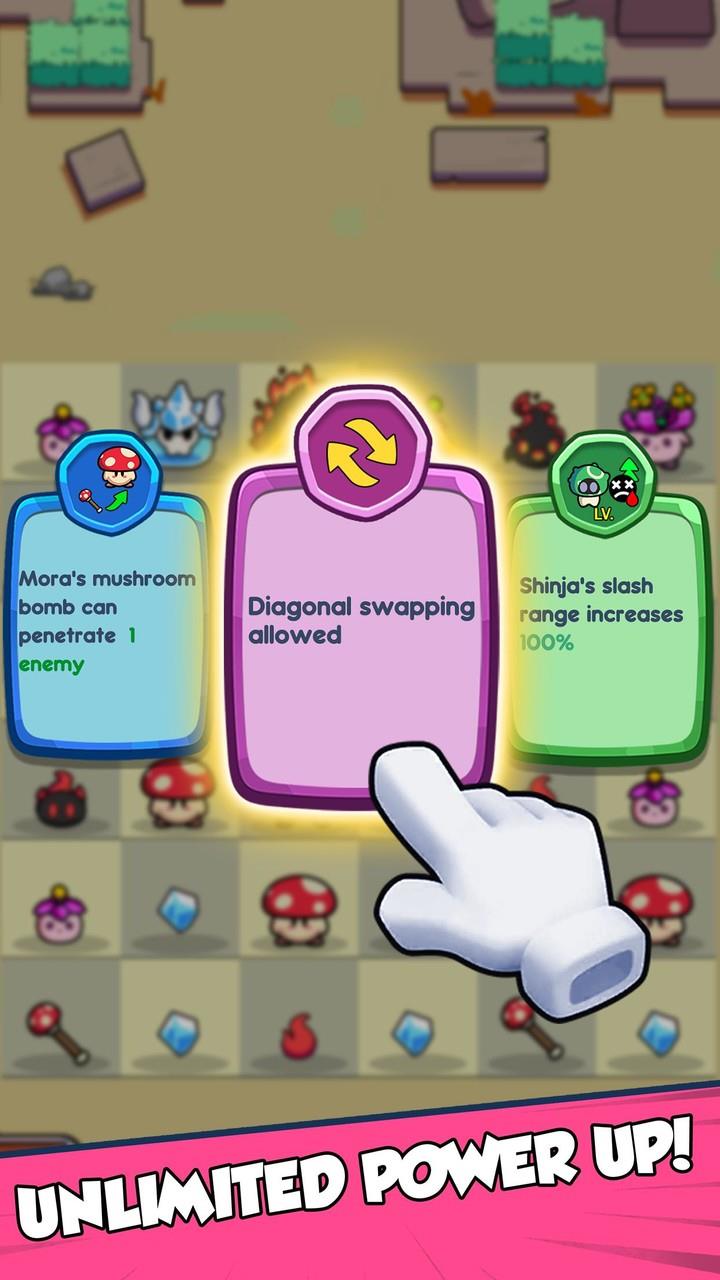
Progression in Shroom Guard combines roguelike skill choice with persistent growth. Each run grants temporary abilities and modifiers that change the way merges and combats resolve, so two successive sessions can feel very different. Between runs you unlock additional monster types, new deployment slots, and passive upgrades that alter core mechanics like merge speed or resource gain. This layered progression rewards both short-term tactical success and long-term investment in the roster of guardians.
Visual style and sound
The game favors a stylized, colorful aesthetic that highlights the mushroom kingdom’s whimsical atmosphere while keeping battlefield clarity a priority. Units are designed to be visually distinct even when compacted in a busy lane, and particle effects communicate hits and abilities without overwhelming the screen. Ambient music and minimalist sound cues support pacing and provide immediate feedback for merges and hits, helping players register success or danger without needing lengthy tutorials.
Level structure and challenge systems
Levels are structured as sequences of increasingly difficult waves with occasional mini-boss encounters that test specific defenses or require alternate strategies. Challenge modifiers appear in later stages to change enemy composition or impose resource constraints, creating short-term objectives like focusing on crowd control or burst damage. Roguelike elements shuffle available modifiers and skills between runs so the difficulty curve becomes an opportunity to experiment rather than a static gate.
Customization and replay value
Shroom Guard emphasizes creativity through merge variety and unit roles: tanks, ranged attackers, support units with area effects, and hybrid types that reward unconventional pairings. Because merges are the core growth mechanic, players can pursue different build philosophies each run, prioritizing scaling power, utility, or speed. Persistent unlocks broaden the available strategies over time, and the combination of randomized run modifiers and a deep merge tree gives the game strong replay value without relying on external multiplayer systems.
User experience, accessibility, and offline play
The user experience focuses on short, satisfying sessions suitable for casual play while still offering depth for longer campaigns. Accessibility options include scalable text, adjustable effect density to reduce visual clutter, and simplified controls for players who prefer streamlined interactions. Shroom Guard supports fully offline play for most core features so you can run sessions without a network connection; only optional content that relies on remote updates may need connectivity.
Feedback and pacing
Pacing is adjustable through difficulty settings and in-run choices that let you tailor how intense each session becomes. The game provides clear feedback on why a wave was lost or won — whether due to poor placement, insufficient merges, or an unlucky modifier — helping players refine tactics. While the roguelike randomness introduces variability, it also creates opportunities to discover unexpected synergies and to learn systems at your own pace.
Show More