Lost Pages: Deck Roguelike
Version:7.8.2
Published:2026-08-07
Introduction
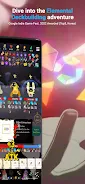
Lost Pages: Deck Roguelike rethinks turn-based card combat by replacing random draws with a deliberate elemental resource system that rewards planning, adaptation and precise timing. In each run you collect four basic elements—fire, water, earth and air—plus a volatile Ether resource that shifts behavior when drawn, enabling powerful chain reactions and emergent combos. The result is a tactical deckbuilding roguelike with a persistent progression layer, handcrafted animations and an unfolding narrative that unites short, intense runs with longer-term goals.
Key gameplay mechanics
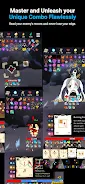
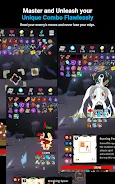
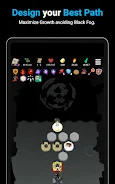
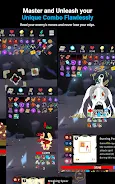
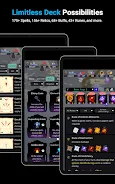
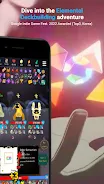
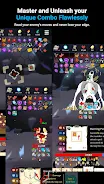
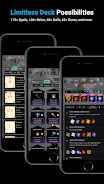
The core loop of Lost Pages: Deck Roguelike centers on resource-driven casting rather than pulling random cards. Spells require specific elemental inputs pulled from a visible pool each turn, so you plan several turns ahead to assemble combos and conserve resources. Ether acts as a wildcard that can convert into other elements or trigger bonus draws, creating opportunities for dramatic turn swings. Magic circles, artifacts and runes modify how elements behave or how spells resolve, which means each run reshapes what strategic options are viable. Combat encounters emphasize positioning of actions, timing of chain effects and adapting to changing elemental draws rather than relying on luck alone.
Controls & interface
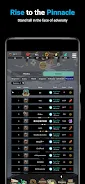
The interface is designed for clarity on touch devices: tap to select spells and targets, drag to reorder queued actions, and use contextual tooltips to inspect how elements and artifacts interact. An on-screen HUD shows current elemental availability, pending Ether effects and active modifiers so you always know your tactical window. The game avoids overloaded menus and instead surfaces important information during decisions, which helps new players learn the resource system while giving experienced players the tools to optimize complex combos.
Progression and level design
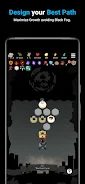
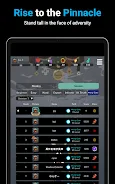
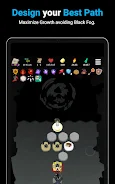
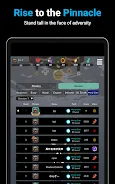
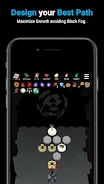
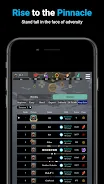
Progression mixes run-based variety with persistent character growth. There are 106 levels that guide the main narrative and unlock new mechanics, and a separate 100-level Dimensional Gate mode for players seeking a deeper endurance challenge. Levels are structured to introduce mechanics in a controlled way—early encounters teach elemental fundamentals, while later stages combine enemies and modifiers that test adaptability and build optimization. Completing milestones unlocks new magic circles, artifacts and runes that become available in future runs, so the pool of strategic options grows steadily as you play.
Customization and build depth
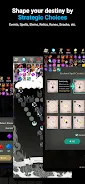
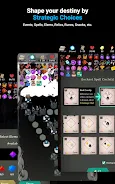
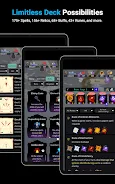
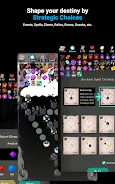
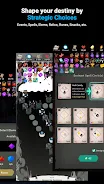
Customization focuses on how you shape each run through choices rather than cosmetic options. Artifacts and runes alter core mechanics—changing spell costs, element conversion rates or the behavior of Ether—so players can create builds that prioritize bursts, long-term resource efficiency, or disruptive control. Magic circles add signature effects that can shift a deck’s identity mid-run. These systems combine to make each playthrough feel distinct: the same base spells can produce very different strategies depending on the modifiers you discover.
Replayability and challenge systems
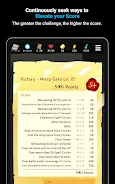
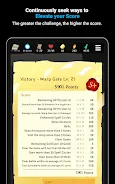
Replay value comes from the large combination space of magic circles, artifacts and runes, plus the branching encounters and occasional surprise modifiers that keep runs unpredictable. The overall difficulty curve is intentionally steep but fair: early levels are approachable, while advanced modes demand mastery of resource management and combo timing. Optional challenge modifiers and the Dimensional Gate mode provide a long-term ladder for players who enjoy refining approaches and chasing consistent victories across many runs.
Visual style and presentation
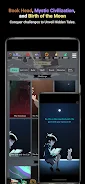
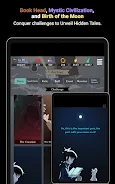
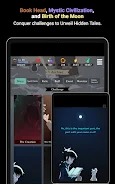
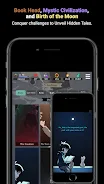
The game pairs a moody, hand-crafted art direction with polished, cinematic animations to make each successful combo feel meaningful. Spell effects are animated with attention to timing so chains look and sound satisfying, and the UI balances readability with aesthetic detail. Story sequences are delivered through short animated beats that expand the setting without interrupting runs, contributing to the sense that each playthrough is an episodic chapter in a larger mythos.
User experience, accessibility and offline play
Lost Pages: Deck Roguelike includes an introductory tutorial and progressive tooltips that help new players understand elemental interactions and Ether mechanics at their own pace. Settings provide adjustable text size and control sensitivity to improve readability and comfort on a range of devices. Runs save locally so the game is playable offline; seasonal updates and additional content can be downloaded when you have network access but core gameplay does not require an always-on connection.
Development and live support
Developed by an independent studio with a focus on narrative and long-term content support, Lost Pages: Deck Roguelike receives seasonal updates and additional story animations—an ongoing season began on April 1, 2024 and the team continues to add new levels and narrative sequences. The studio’s roadmap emphasizes balancing, curated content drops and quality-of-life improvements based on player feedback, ensuring the title evolves while retaining its tactical core.
Show More