Khemia
Version:1.0
Published:2026-08-21
Introduction
Khemia is a story-driven visual novel that places players into the shifting politics of Adastra through the eyes of Scipio, a young wolven diplomat struggling to navigate the aftermath of the Human arrival. This introduction to Khemia highlights its focus on political intrigue, character-driven scenes, and a slow-burning mystery that unfolds across episodes; the game is currently in development, so early players can experience the narrative as new chapters and refinements are added. The writing aims for moral ambiguity and thoughtful pacing rather than reflex-based action, making the title appealing to readers who prefer deep characterization and atmosphere over combat or arcade mechanics.
Key Features
The core of Khemia is a branching narrative where player choices influence loyalties, alliances, and later revelations; decisions are recorded and can change dialogue, access to scenes, and the perspective of key characters. Distinct 2D sprite art and background illustrations are paired with an original musical score to reinforce mood and setting, while episodic updates deliver new chapters and refinements over time. The project supports conventional visual novel conveniences such as multiple save slots, a choice history backlog, and selective skip or auto modes so readers can pace their experience. Supporters and early backers occasionally gain access to preview builds prior to public releases, and the development roadmap emphasizes steady, content-driven updates.
Gameplay and Mechanics
Gameplay in Khemia centers on reading, deciding, and revisiting narrative branches to uncover different outcomes. Choices range from conversational tone to strategic diplomatic moves, with consequences that ripple across scenes rather than presenting immediate game over states. The system encourages exploration through optional scenes and information gathering, and many outcomes unlock only after making certain decisions earlier in the story. Progression is chapter based: completing scenes advances the plot and sometimes unlocks new dialogue options or side interactions in later episodes. Save and resume mechanics are straightforward, allowing you to maintain multiple playthroughs to compare paths and endings.
Controls and User Experience
The interface has been designed for touch-first devices: tap to advance text, swipe to access the backlog, and tap choice options to select responses. Settings let players adjust text speed and enable an autoplay mode for a hands-off reading experience, while a skip function helps move past previously read sections. Khemia places an emphasis on a calm, intuitive reading flow with clear visual cues for interactive elements and confirmation prompts for important narrative choices to avoid accidental decisions. The design balances accessibility with the need to present consequential choices that require thought rather than reflexes.
Visual Style and Audio
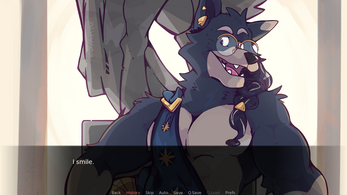
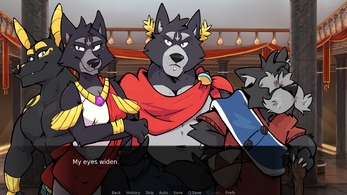
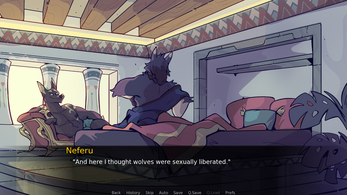
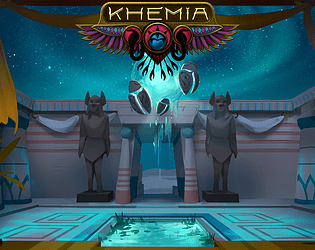
Art direction favors moody, atmospheric visuals that support the political and ethical themes of the story: character sprites express subtle emotional shifts, and layered backgrounds convey locations across Adastra with attention to light and texture. The soundtrack is original and composed to complement scenes rather than overwhelm them, supporting quieter conversations as well as moments of tension. Visual effects are used sparingly to preserve readability and to keep focus on character expressions and dialogue, while UI elements remain unobtrusive to maintain immersion.
Progression and Episodic Structure
Khemia is organized into episodes and chapters that are released over time, with the development team aiming for regular updates so the narrative can expand and change in response to feedback. Each episode typically contains several scenes and potential branch points; completing an episode may unlock new choices or paths in later releases. The episodic model lets players follow an evolving story world and revisit earlier chapters if new content changes context or reveals additional information. Release notes accompany new builds so returning players can quickly see what has changed.
Accessibility and Offline Play
Accessibility options include adjustable text size and text speed, contrast-conscious UI choices, and an option to reduce or mute background animations and effects for improved performance on lower-end devices. Khemia is playable offline once downloaded, allowing readers to continue through installed episodes without a network connection; periodic updates are downloaded when connected. Save data is stored locally with multiple slots so you can experiment with different routes without losing progress, and the development team plans to prioritize stability and performance across a range of Android devices.
Replay Value and Challenge
The primary challenge in Khemia is narrative and moral rather than mechanical: players must weigh competing interests, interpret partial information, and live with consequences that affect relationships and story access. Multiple endings and branching scenes encourage replaying chapters to discover hidden threads and character motivations, and the choice history and save system make it easy to explore alternate paths. For readers who enjoy piecing together mystery through dialogue and consequence, the game offers satisfying replay value through its layered storytelling and gradually revealed lore.
Development Status and Updates
Khemia remains under active development and is distributed in an episodic fashion so the team can refine writing, visuals, and systems with community input. The developers have indicated a regular update cadence and communicate upcoming changes through release notes; players who follow updates will see both new content and quality of life improvements. As the title grows, expect ongoing polish to narrative branches, artwork, and audio while core mechanics such as saving, choice tracking, and offline play remain consistent to support long term engagement.
Show More