My Town: School Mod
Version:1.84
Published:2026-10-03
Introduction
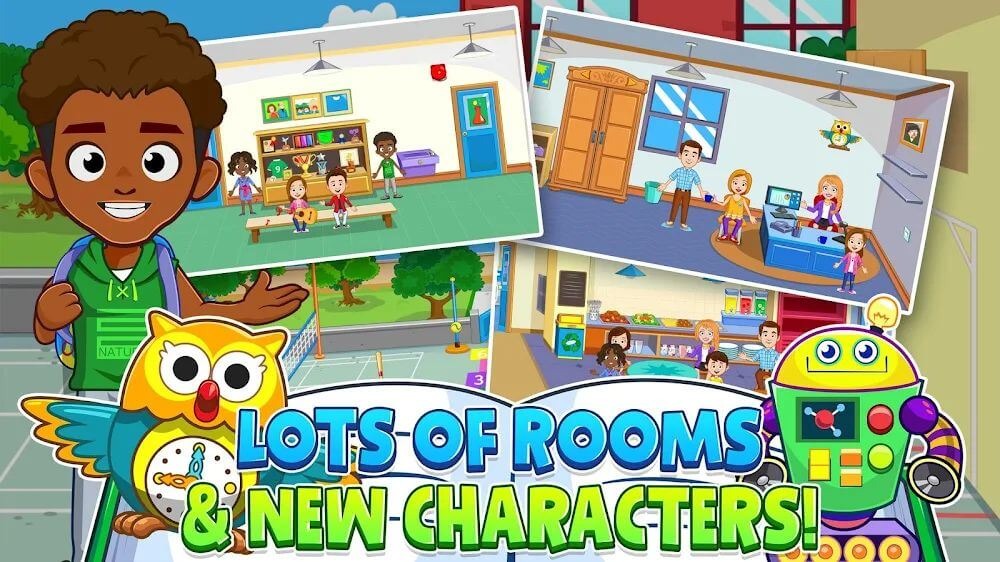
My Town: School Mod brings a playful school simulation for kids where players step into a busy campus, explore classrooms, and stage imaginative stories. In this casual, child-friendly game you can guide characters from the bus stop through a bell-marked routine, try music and science activities, play sports mini-games like basketball and badminton, and customize outfits and emotions. The game’s open-ended gameplay and cross-platform worlds let kids visit friends and create shared scenes, making it appealing for parents who want a safe, creative experience for children aged 4–12.
Key Features
⭐ Explore a realistic school environment with a hall that leads to the cafeteria, music room, science lab, sports ground and restrooms; the day even begins at the bus stop when the bell rings.
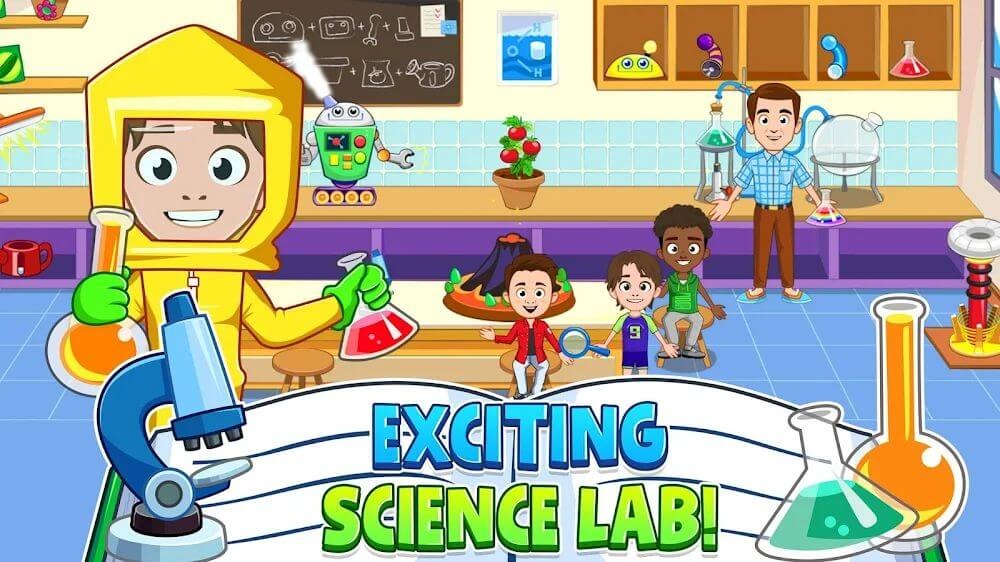
⭐ Play hands-on activities: perform musical pieces, run experiments in the lab and enjoy sports mini-games where players can compete in basketball, badminton and more.
⭐ Cross-platform social play: My Town: School Mod lets players visit other players' worlds and share characters and scenes to strengthen the social gameplay.
⭐ Interactive characters and objects — double-click or press to change emotions (laugh, cry, smile), drag characters around, combine items and collect hearts as rewards.
⭐ Dress-up and variety: new clothes, brands and characters expand role-play options and allow you to use favorite characters from previous My Town titles.
Advantages
✅ Designed for children aged 4–12 with simple mechanics and a gentle learning curve suitable for independent play.
✅ Encourages creativity and freeform storytelling through open-ended gameplay, role-play locations and collectible items.
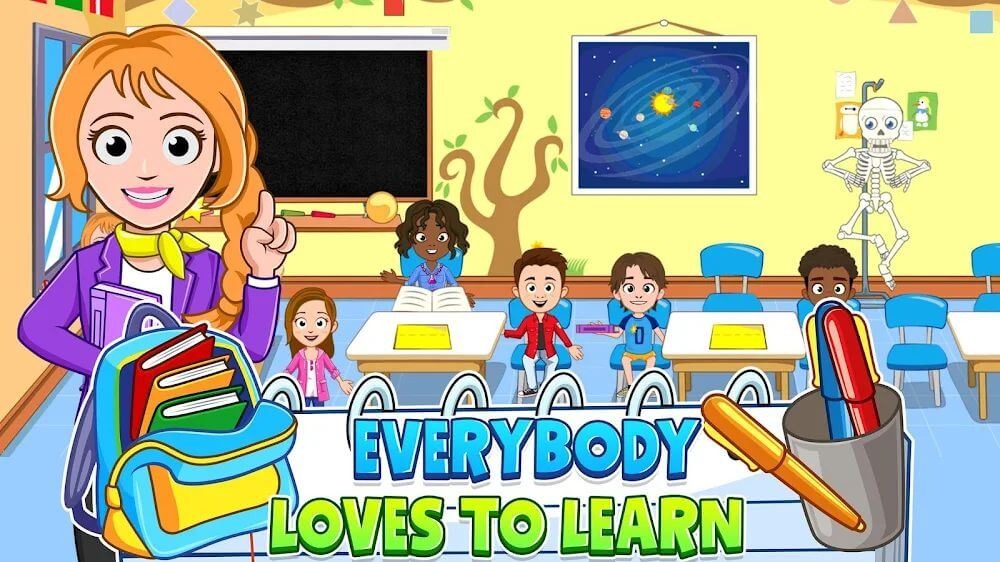
✅ My Town: School Mod combines educational touches like music and science activities with social mini-games to keep players engaged.
✅ Intuitive 2D, doll-world mechanics let players drag characters and interact directly with objects, making controls accessible for young kids.
Disadvantages
❎ Open-ended design means there are few structured goals or levels, which may feel aimless for players who prefer clear objectives.
❎ Many interactions are discovered by trial-and-error and some objects are hidden, so younger children might need time to find causes and effects.
❎ Characters are often stationary until you drag them, which can feel restrictive compared with more dynamic movement systems.
Show More