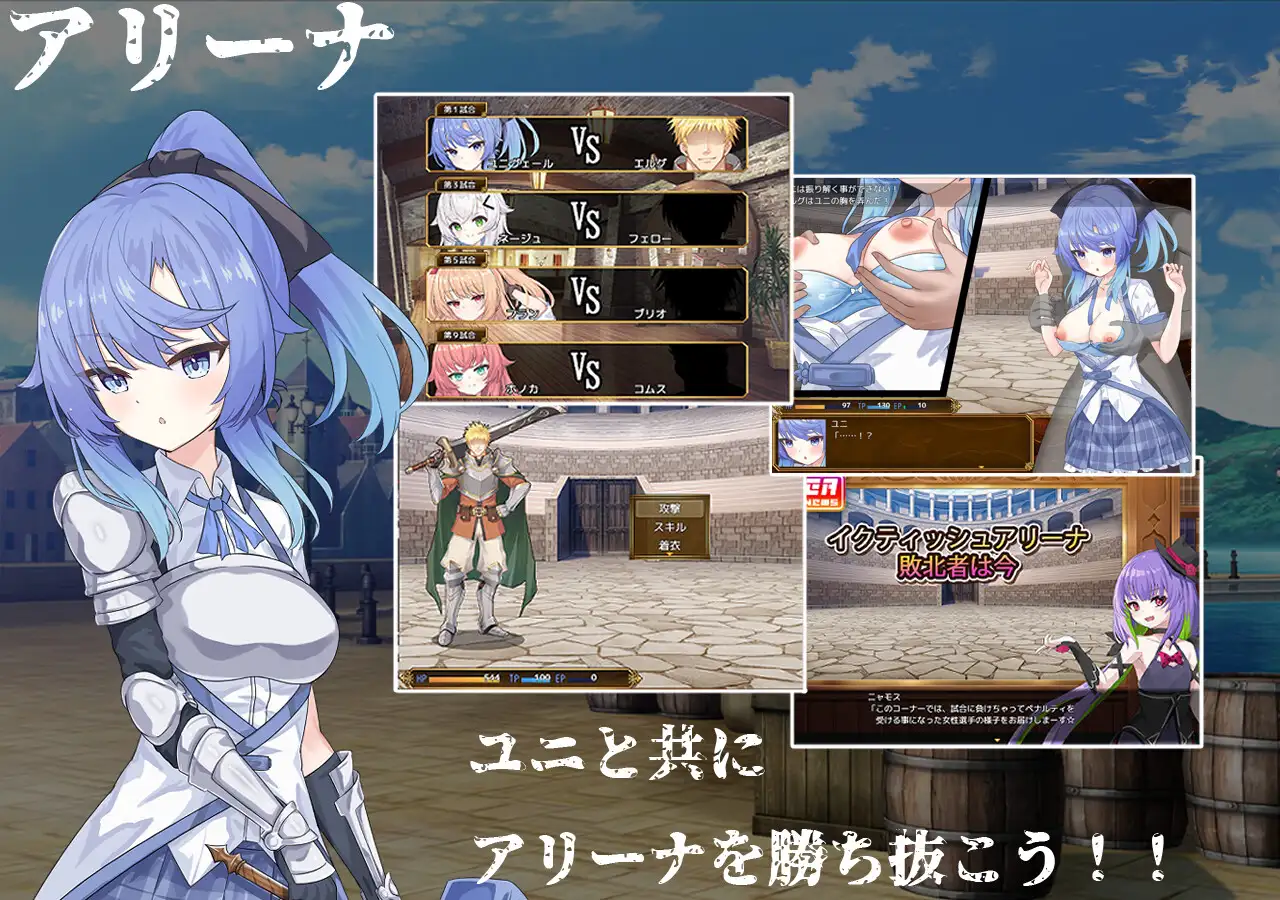
Selobus Arena
Version:Final
Published:2026-10-04
Introduction
Selobus Arena places you in the role of Universe, a cash-strapped fighter navigating a corrupt tournament circuit and risky dungeons between matches. Selobus Arena combines arena combat, resource management and a choice-driven narrative: each fight, wager and decision affects reputation, alliances and which opponents you encounter both inside the ring and while exploring the world beyond it. The game balances a story-driven progression with survival elements, where stamina, equipment condition and morale all influence available actions and long-term outcomes.
Core gameplay
The core loop alternates arena bouts and dungeon expeditions. Arena combat emphasizes timing, evasions and chaining strikes in a physics-influenced system that rewards positioning and momentum rather than simple button-mashing. Between matches you explore dungeons to scavenge gear, uncover intel and trigger events that can unlock or close narrative branches. A wagering mechanic lets you stake in-game currency to improve your standing, acquire upgrades or gain secret information; results vary based on your reputation and choices, making risk a meaningful part of progression.
Controls and interface
Controls are designed for touchscreens with context-sensitive gestures and on-screen buttons for attack, dodge and special maneuvers. Combat feedback includes visual cues for hit windows and stamina cost so players can learn and refine timing. The inventory and status screens are organized to make resource management straightforward: one view summarizes health, stamina and morale, while another tab handles equipment loadout, consumables and active bonuses. Menus are accessible during non-combat exploration to reduce interruptions during fights.
Progression systems
Player progression mixes character upgrades, equipment improvements and narrative reputation. Experience earned in fights and exploration unlocks stat boosts and new combat techniques, while crafting and equipment finds improve survivability. Reputation and alliance choices open exclusive dialogue options and alter which factions offer side content or bribes. The game includes checkpoints and save options that respect player risk: some decisions have irreversible consequences, reinforcing the weight of strategic play and resource planning.
Visual style and audio
The presentation leans on stylized art that balances mature themes with atmospheric environments. Characters and arenas are rendered with expressive poses and clear action readouts so combat is visually readable. Dungeon areas use distinct lighting and sound design to signal danger, traps or hidden rooms. A soundtrack complements pacing with tense cues for high-stakes matches and ambient textures for exploration, while voice snippets and short dialogue lines enhance character personalities without overwhelming the text-based narrative.
Level structure and encounters
Levels are structured as mixed arenas and multi-room dungeons that reward exploration and observation. Arena brackets progress through increasingly complex opponent behaviors, while dungeon rooms contain puzzles, traps and enemy types that require different tactics. Encounters often offer multiple resolutions: a direct fight, a stealth approach, or using resources and reputation to negotiate or bribe. This variety encourages players to adapt loadouts and playstyles rather than repeat a single approach.
Customization and replay value
Customization covers equipment choices, combat techniques and relationship paths that influence story outcomes. Unlockable gear and persistent upgrades let you tailor Universe to a more defensive or aggressive playstyle. Multiple narrative branches, reputation outcomes and unlockable gallery content provide replay incentives: different alliance choices and wager outcomes open new opponents, dungeon events and story beats, encouraging multiple playthroughs to see alternate endings and exclusive scenes.
User experience and accessibility
The game aims for clarity and accessibility through adjustable difficulty and readable UI scaling. Options allow tuning combat pacing, reducing input sensitivity or enabling toggles that simplify stamina management for players who prefer narrative focus. Text is presented with clear contrast and font sizing options to improve readability. Tutorials introduce mechanics progressively so new players can learn wagering, reputation effects and dungeon navigation without being overwhelmed.
Offline play and performance
Selobus Arena is built to run primarily offline with save and checkpoint systems that preserve progress without requiring a persistent connection. Performance optimizations prioritize smooth frame rates during combat and battery-friendly behavior while exploring dungeons. Graphics and audio settings can be adjusted to match device capabilities, helping maintain a consistent experience across a range of hardware.
Challenge and balance
The challenge system blends stamina management, enemy variety and resource scarcity so encounters feel meaningful rather than repetitive. Difficulty spikes are mitigated by multiple tactical options—equipment, consumables and negotiation—so players can approach problems in different ways. The wagering mechanics add an additional layer of risk and reward, where smarter bets and better intel can tip tough matches in your favor or create compelling setbacks that change the narrative path.
Content notes
While Selobus Arena contains mature themes and suggestive scenes tied to storyline outcomes, the writing focuses on narrative consequence and character development rather than explicit detail. Players who appreciate branching stories, risk-reward gameplay and a mix of arena combat with dungeon exploration will find a layered experience that emphasizes choices, consequences and varied playstyles.
Show More