Little Sister Communication
Version:1.0
Published:2026-10-06
Introduction
Little Sister Communication is a story-driven casual game that puts you in charge of managing a shared household while supporting a young adult housemate through an unexpected life change. This editor summary highlights the game's pacing, mechanics, and accessibility so you can quickly evaluate whether the tone and systems match your playstyle. The description below focuses on the everyday choices, resource trade-offs, and branching narrative that define the experience without promising features the original release does not include.
Overview
In Little Sister Communication the emphasis is on character interaction and routine management rather than fast action. The game unfolds across chapters that represent days, weeks, and milestone events, and each chapter gives you a set of meaningful choices: go to a part-time job, tidy the apartment, cook a meal, or spend time talking. Choices consume time and money and influence both the immediate comfort of the household and the long-term direction of relationships. Narrative beats are designed to develop gradually so scenes can reflect the consequences of earlier decisions and unlock different endings based on accumulated outcomes.
Gameplay Mechanics and Controls
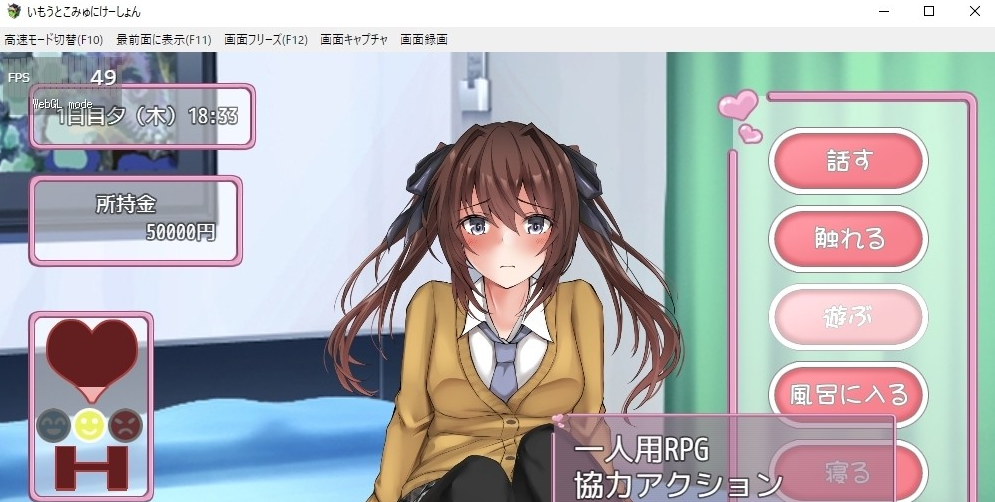
Gameplay combines light time management with a branching dialogue engine. Controls are touch-first and straightforward: tap to interact with objects and characters, swipe to advance dialogue and select conversational options, and drag to rearrange items or complete simple environmental puzzles. Each available action displays an estimated time cost and any associated expense, making planning a central part of play. Puzzles are integrated into daily tasks — organizing belongings, repairing small appliances, or reconstructing fragments of a journal — and are intentionally approachable to complement the narrative rather than interrupt it.
Progression and Replay Value
Progression runs on two parallel systems: household stability and social relationship meters. Household stability tracks money, supplies, and living conditions, while social relationship progress depends on conversation choices and shared activities. As chapters progress, new dialogue branches, optional tasks, and scene variants appear based on earlier decisions. Multiple endings and secret events reward different balances between career, self-care, and the well-being of your housemate, encouraging replay to see how small shifts in priorities produce different outcomes and hidden storylines.
Visual Style and Audio
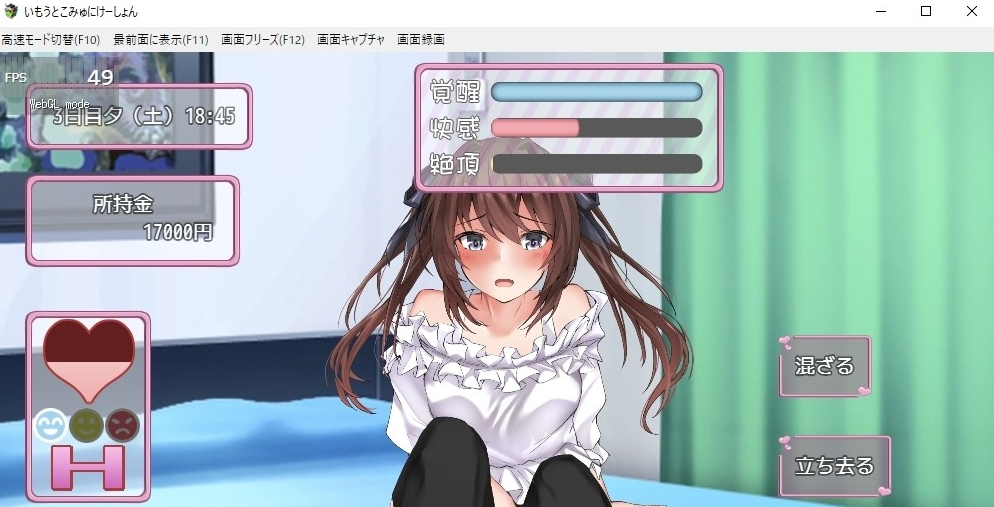
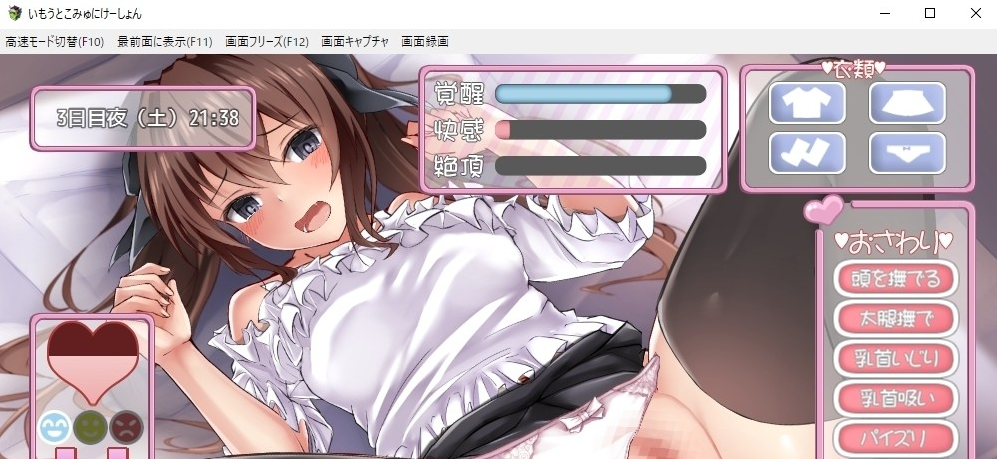
The presentation favors hand-crafted 2D scenes with selective full-animation moments to underline emotional peaks. A warm, lived-in palette evolves as the household changes, and the UI uses subtle motion to direct attention without distracting from story moments. An original, calming soundtrack and ambient audio set the tone in each scene, while layered voice performances accompany key exchanges to increase immersion. Visual details respond to the choices you make: decorations, lighting, and background objects can reflect the current state of the home.
Customization and Level Structure
Customization centers on the shared living space and small cosmetic choices for characters. Currency earned by completing tasks or achieving objectives can be spent on furniture, decorations, and comforts that open new interaction prompts and slightly alter scene composition. The chapter-based structure creates clean stopping points, making it easy to pick up where you left off; each chapter contains clear goals, optional side tasks, and checkpoints so progress feels meaningful without requiring marathon sessions.
Challenge Systems and Pacing
Challenges come from balancing limited time and resources, responding to unforeseen events, and managing emotional choices that carry weight in later scenes. The game supports different approaches: players who enjoy reflective storytelling can take a slower, exploration-focused route, while those who prefer efficiency can optimize days to test management skills. Difficulty settings and contextual hints help reduce friction for players who want a gentler experience or who may find micro-management taxing.
User Experience and Accessibility
The UI is designed for comfortable mobile play with readable fonts, responsive controls, and options for larger text and high-contrast color schemes. Subtitles are available for voiced scenes and tutorials introduce mechanics gradually so new players can learn at a comfortable pace. An auto-save feature preserves progress between chapters and an optional fast-forward helps reduce repetition when replaying dialogue-heavy sections.
Offline Play and Technical Notes
This single-player title functions fully offline with local save files, so you can play without a persistent internet connection. Performance options let you adjust animation quality and audio levels to suit a wide range of devices. The build is optimized for stability across common Android configurations and includes basic troubleshooting guidance in the settings menu.
Who This Game Suits
Little Sister Communication will appeal to players who appreciate slow-burn narratives, character-driven interaction, and thoughtful daily-sim mechanics. It is suitable for those who enjoy branching stories with replay value, gentle puzzle integration, and a focus on interpersonal dynamics rather than combat or fast reflexes.
Show More