Heroine Dark Side
Version:1.0-debug
Published:2026-10-07
Introduction
Heroine Dark Side is a 2D strategy title aimed at mature players, putting you in the role of an antagonist who runs a corrupt organization and seeks to manipulate heroic figures to your cause. The introduction places emphasis on tactical planning rather than action reflexes, and within the first missions the game teaches core systems such as surveillance, trap deployment, psychological influence and decisive event resolution. This editorial overview explains the gameplay, controls, progression and other practical details so you know what to expect before installing Heroine Dark Side.
Gameplay and core mechanics
The heart of the experience is a multi-phase corruption system that treats each target as a layered encounter. Phase one emphasizes information gathering and surveillance to reveal strengths, weaknesses and daily patterns. Phase two focuses on setting traps or staging incidents that change a heroine's circumstances. Phase three is about targeted interaction through dialogue choices, scripted events and short mini-games that influence loyalties. Resource management and base building provide the strategic framework: allocate limited funds and personnel to upgrade facilities, run propaganda campaigns or unlock specialized labs that support specific corruption tactics. Encounters are resolved through a mix of resource allocation, tactical placement and decision trees rather than pure combat.
Controls and user interface
Designed for touch devices, the control scheme relies on intuitive taps and drags to place assets, assign agents and trigger events. Menus separate strategic planning from mission execution so you can prepare in a calm planning screen and then switch to an encounter view for timed decisions. The UI includes context-sensitive tooltips, an accessible pause menu and a tutorial line that introduces mechanics gradually over the first several missions. For players who prefer precision, controls support pinch-to-zoom for the encounter map and long-press for detailed unit information.
Progression systems and upgrades
Progression is driven by a campaign of missions and a reputation system that tracks how factions and individual heroines respond to your actions. Completing objectives rewards currency and research points used to upgrade headquarters, expand training facilities, improve surveillance networks and unlock propaganda options. Individual agents and corrupted heroines gain experience and new abilities, which lets you evolve tactical roles within your organization. The game also features a New Game Plus mode that preserves some upgrades while altering narrative choices to encourage experimentation with different strategies.
Visual style and presentation
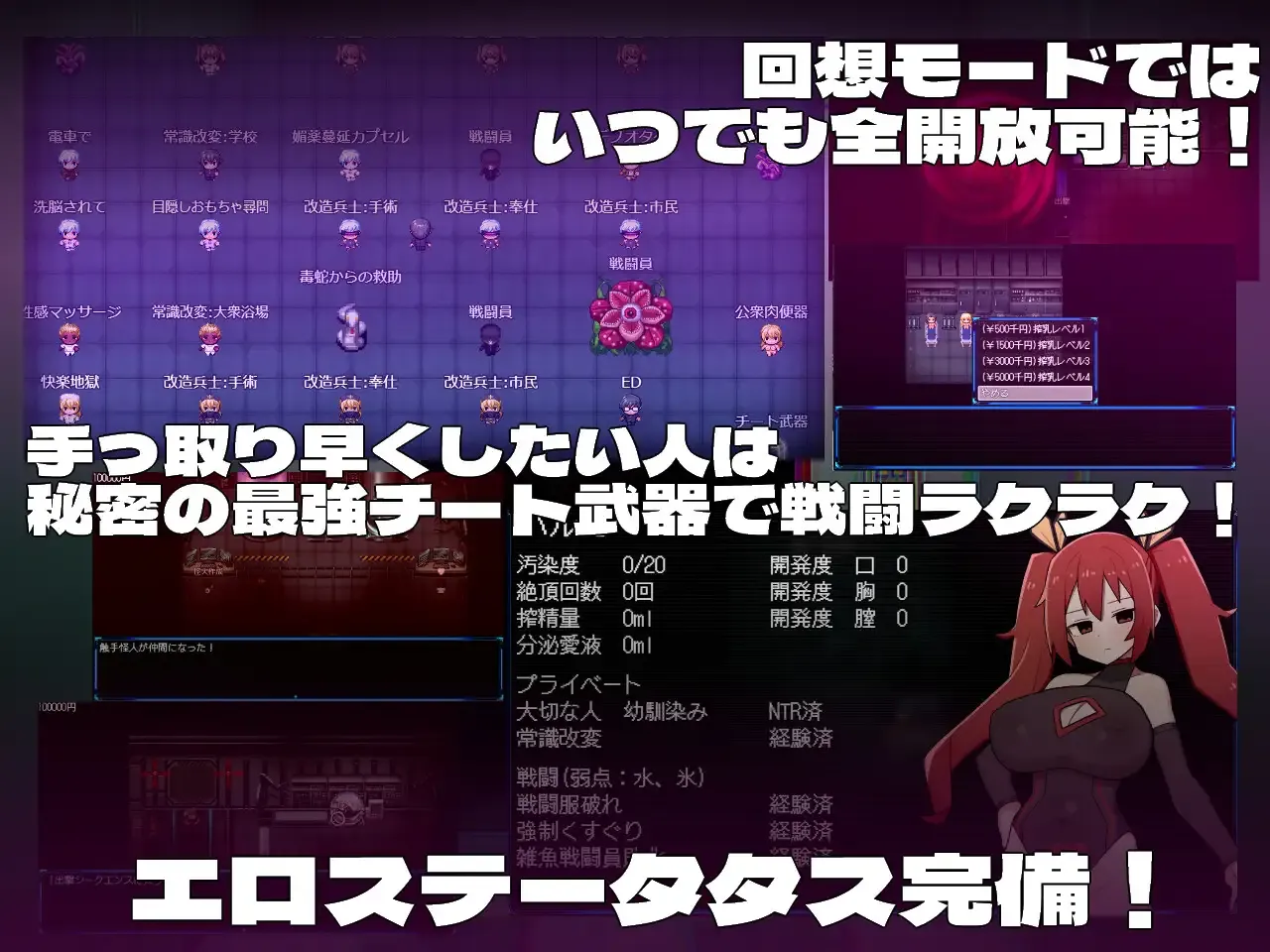
The art direction favors richly illustrated 2D character portraits and hand-drawn backgrounds that create a cinematic tabletop feel. Animated sequences accompany key story moments and corruption events, but the overall presentation stays within tasteful, stylized boundaries that emphasize mood and character rather than explicit depiction. The interface design balances decorative illustration with clear, readable icons and adjustable text sizes to maintain legibility on a range of screen sizes.
Level structure and challenge systems
Levels are structured as individual operations within an overarching campaign, each with specific goals, optional objectives and environmental modifiers. Difficulty settings let you tune the AI responsiveness, resource scarcity and the strictness of time-limited events. Challenge modes present curated scenarios with unusual constraints for players seeking a tighter tactical puzzle, and an achievement system records milestones and unlocks cosmetic rewards like alternative costumes or base themes.
Customization and replay value
Customization is both cosmetic and tactical: corrupted heroines receive skill trees and gear choices that influence how they perform in later encounters, and headquarters upgrades alter available strategies. The branching narrative means the same mission can play out differently depending on earlier choices, creating high replay value as you pursue different reputations and endings. Heroine Dark Side encourages multiple playthroughs by offering unlockable content tied to specific story branches and optional challenge modes.
User experience, accessibility and offline play
The single-player design makes the game fully playable offline after installation, with save states and local profiles so you can pick up progress on different devices. Accessibility options include adjustable difficulty, scalable text, color contrast settings and a streamlined control mode for players who prefer a simplified interface. In-game help pages and an optional guided tutorial reduce the learning curve for complex mechanics such as reputation management and multi-phase encounters.
Who should play and final notes
This title is best suited to players who appreciate strategic planning, narrative complexity and morally ambiguous scenarios. While the game contains mature themes and a deliberately unsettling premise, it presents those elements through strategic systems and branching storytelling rather than explicit content. If you enjoy resource management, emergent choices and layered encounters with a strong 2D aesthetic, Heroine Dark Side offers a deep single-player strategy experience with significant replay value and tactical depth.
Show More