Jumanji
Version:1.9.7
Published:2026-10-12
Introduction
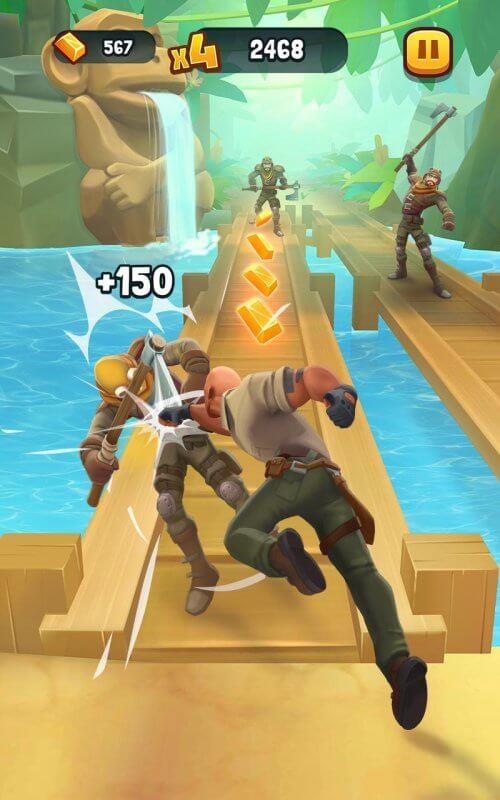
Jumanji drops players into a fast-paced running adventure where the sacred Falcon Jewel has been stolen and the clock is ticking to recover it. In Jumanji you balance high-speed chase sequences with light combat and platforming as you dash past hyenas, fend off charging rhinos and avoid avalanches across waterfalls and cliffs. The opening stages are designed for quick pickup-and-play sessions while deeper level paths and character progression invite longer runs, making this licensed arcade runner approachable for new players and engaging for repeat play.
Key Features
The game presents four distinct runner modes that mix timed races, combat-oriented runs and precision platforming so each level asks for a different approach. Biomes such as The Jungle, The Oasis, The Dunes and Mt. Zhatmire each introduce unique hazards and stage mechanics, while occasional boss encounters create slower, strategic set pieces between bursts of forward motion. Collectible power-ups, including Magnet, Shield and Gold Doubler, appear regularly on routes and can be activated to alter pickups or grant temporary survivability, so choosing when to use them is an important part of planning a successful run.
Gameplay and Controls
Controls are tuned for touchscreens with swipe-based lane changes, upward swipes to jump and downward swipes to slide, and a single tap to perform an attack or interaction. Special abilities occupy on-screen buttons with visible cooldown timers to discourage spamming and to encourage timing and decision-making. Platforming segments require well-timed jumps and short tap combos, while combat encounters combine basic attack inputs with evade mechanics to create rhythm-based encounters rather than complex combos. The intent is a gentle learning curve that still rewards practice and precision on repeat attempts.
Progression and Customization
Progression centers on collecting in-game currency and power-up shards during runs to unlock new outfits, boost passive bonuses and expand the character roster. Outfits provide modest gameplay bonuses tied to specific power-ups or stats, allowing cosmetic changes to also reflect strategic tailoring. The game balances fixed unlock milestones with randomized rewards to maintain a steady sense of advancement without forcing excessive grinding, and short-term objectives plus milestone rewards help players feel progress even during brief play sessions.
Visual Style and Level Structure
The visual presentation favors bright, cinematic environments with clear telegraphing of upcoming obstacles so players can react quickly. Each biome uses themed assets and animation cycles to signal dangerous terrain or enemy behavior, for example charging rhinos or collapsing ledges, and camera framing emphasizes forward motion while giving enough perspective to anticipate hazards. Levels are assembled from bite-sized segments with occasional longer set pieces, which keeps runs repeatable yet varied as the same zone can present new obstacle sequences on different attempts.
Replay Value and Challenge Systems
Replay value comes from the mix of modes, character builds and layered challenge systems that alter run conditions. Timed trials, boss-focused encounters and objective-based runs encourage players to adapt to specific goals and experiment with different characters and loadouts. Optional challenge tiers increase hazard density or add modifier rules that deliver higher rewards, offering skilled players ways to chase faster times or bigger scores while casual players can select more forgiving settings to enjoy exploration and steady progression.
User Experience and Accessibility
Menus and onboarding prioritize clarity, with concise tutorials that introduce core controls and a practice area that lets you rehearse jumps and attacks without affecting progression. Accessibility options include adjustable difficulty scaling and simplified input modes to assist players who prefer less rapid swiping. Control sensitivity adjustments are available to match different devices and handedness preferences, and the overall UI is designed for legibility in a variety of screen sizes and orientations.
Offline Play and Stability
Core running modes are playable offline for most basic functionality, allowing practice and short missions without a persistent network connection. Where online features are present, they are non-essential to core progression so players can continue unlocking characters and outfits while offline. The development team has focused on stable performance across a range of devices and on providing clear options for saving progress and restoring settings after updates.
Development Team and License
This Jumanji release is based on the Columbia Pictures property and is published by Crazy Labs Ltd., with development by PlaySide Studios Pty Ltd. The collaboration blends licensed franchise elements with polished arcade-style runner design, aiming to deliver an accessible mobile experience that respects the source material while focusing on tight controls, varied level design and a steady, reward-driven progression system.
Show More