Sonic Dash Run
Version:7.11.0
Published:2026-10-12
Introduction
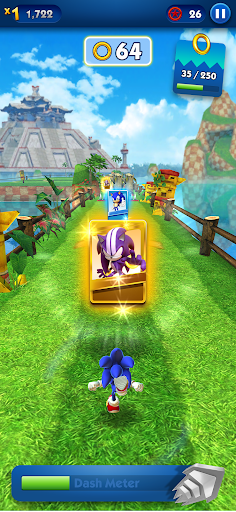
Sonic Dash Run delivers high-speed endless running action focused on momentum, reflexes and progression. In Sonic Dash Run you sprint through varied tracks, pull off lane changes and jumps, and gather boosts that reward smart timing; the introduction run and tutorial ease new players into fast-paced gameplay while providing clear goals for continued improvement.
Gameplay Overview
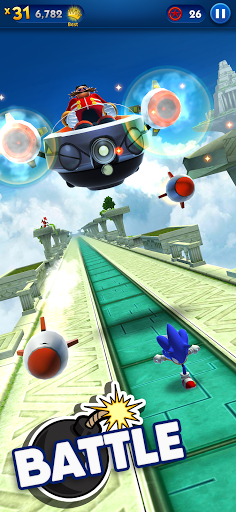
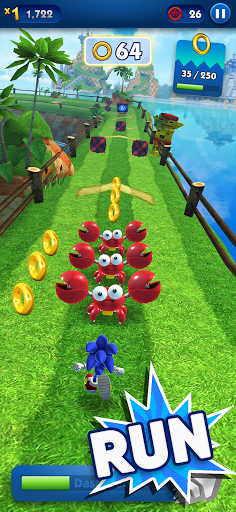
The core loop of Sonic Dash Run emphasizes continuous motion and short-term decision making. Runs are structured around three-lane movement with occasional vertical elements and brief combat-like windows where timing and choice of ability matter more than complex inputs. Procedural variations in obstacle placement and collectible distribution keep each attempt feeling new, while set-piece moments introduce memorable hazards and shortcuts. Scoring combines distance, pickups and chained move bonuses so players are encouraged to link actions together rather than rely on isolated bursts.
Controls and Responsiveness
Controls are built around swipe and tap gestures tuned for touch screens, with lane switches, jumps, rolls and skill activations mapped to simple, low-latency inputs. Sensitivity settings and optional control aids help players tailor the response to different devices and playstyles; these options reduce accidental moves on smaller screens and let you prioritize precision when chasing high scores. The description also notes short tutorials and practice runs that teach timing and the feel of each character without overwhelming new players.
Characters and Progression
Sonic Dash Run offers a roster of familiar runners with distinct stat profiles that affect acceleration, top speed and handling. Progression occurs along multiple paths: character leveling increases base stats, unlockable abilities tweak playstyle, and a separate upgrade track provides permanent benefits that improve long-term results. Cosmetic unlocks such as outfits and visual effects let players personalize appearance without altering competitive balance; this separation preserves fair challenge while supporting player expression. Resource management—deciding which characters to advance and which passive boosts to equip—adds a light strategic layer between runs.
Maps, Level Structure and Visual Style
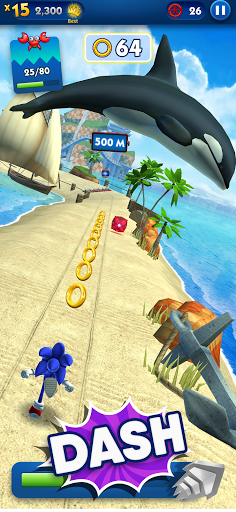
Tracks span urban skylines, lush canyons and mechanical fortresses, each themed area bringing its own rhythm and obstacle vocabulary. Levels combine handcrafted set pieces with procedural elements so that familiarity with a route rewards players, yet randomness maintains replay value. Visuals lean into speed with motion trails, dynamic camera cues and vivid foreground elements that communicate hazards clearly. Graphics scale across hardware so devices with limited power can reduce detail while preserving readable cues critical for split-second reactions.
Power-ups, Customization and Loadouts
During runs you collect temporary power-ups—speed boosts, shields and score multipliers—that provide measurable short-term advantages. Outside of runs, loadouts allow equipping passive boosts, selecting a primary character and choosing cosmetic items; these choices shape how a run unfolds without creating imbalanced pay-to-win steps. The customization system emphasizes meaningful decisions: shift focus toward survivability, score, or mobility depending on your goals, and switch loadouts between events to experiment with different tactics.
Challenge Systems and Replay Value
Replay value is driven by daily missions, rotating events and time-limited stages that encourage experimentation with different characters and routes. Leaderboards and seasonal challenges provide measurable goals for players who prefer competitive targets, while mission chains and achievement-style objectives reward systematic improvement. These layered goals—short-term missions, mid-term events and long-term progression—combine to keep sessions varied and purposeful.
Performance, Compatibility and Accessibility
The game targets a wide range of Android hardware with performance tuning and scalable rendering settings. Smooth frame rates are prioritized to maintain input fidelity, and updates tend to focus on stability, reduced load times and improved battery behavior. Accessibility is considered through adjustable control sensitivity, optional visual aids and brief practice modes that let players work on timing without risking progress. Some features are designed to work in offline practice so you can improve skills without a persistent connection, while event rewards and leaderboards are best experienced when the device is online.
Getting Started and Tips
Start with the tutorial to learn basic moves, then choose a primary character to level early for more forgiving stats. Focus on movement consistency and learning track rhythms before chasing full-score runs, and use temporary power-ups strategically rather than immediately. Rotating through events and missions is the fastest route to unlock resources and new customization options, and periodically adjusting control sensitivity can make a noticeable difference as your reflexes sharpen.
Sonic Dash Run balances accessible pick-up-and-play mechanics with progression and challenge systems that reward repeat play, offering a mobile action experience that supports short sessions and deeper mastery over time.
Show More