2B
Version:1.0
Published:2026-10-12
Introduction
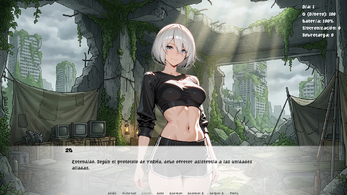
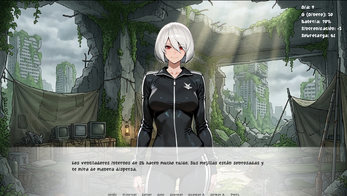
2B is a survival and relationship-management visual novel that places players in a melancholic sci-fi setting where exploration, resource planning, and emotional storytelling intersect. In 2B you take the role of a Commander who discovers a deactivated combat unit amid ruined cityscapes and must repair her, monitor systems, and make choices that shape a fragile bond. This introduction outlines the game experience, controls, progression, visuals, and the current beta status so you know what to expect before installing.
Gameplay mechanics
The core loop of 2B combines time and resource management with branching narrative choices. Players balance maintaining the unit's operating systems, allocating limited power and spare parts, and deciding how to spend in-game time between repairs, exploration, and interpersonal interactions. Repairs are presented as short interactive sequences that require prioritizing subsystems and deciding whether to use scarce materials now or save them for later. Narrative choices influence the unit's responsiveness, open or close scenes, and affect longer term outcomes rather than delivering immediate, obvious consequences. The pacing leans toward a slow-burn experience that rewards careful planning and attention to character detail.
Controls and user interface
2B is designed with mobile-friendly controls that are approachable for touch devices. Interactions use straightforward taps and context menus for repairs, inventory access, and dialogue choices. Repair sequences combine simple tap patterns and small decision menus rather than fast reflex mechanics, keeping focus on strategy and story. The interface includes clear status bars for power, integrity, and emotional state, and a timeline to show upcoming events. A brief guided tutorial introduces the main controls and systems the first time you play, and contextual hints are available when new mechanics appear.
Progression and challenge systems
Progression in 2B is tied to a combination of narrative milestones and system upgrades. As you complete repairs and scenes the Commander unlocks improved components, which increase reliability or reduce resource consumption. Bonding and narrative progression are tracked through relationship metrics that open alternate scenes, and decisions may branch into different arcs. Challenge comes from resource scarcity and time pressure: you cannot repair everything at once, so prioritization and risk assessment are part of the decision-making. Difficulty and pacing are adjustable through settings to accommodate players who prefer a more relaxed story experience or a tighter survival challenge.
Visual style and level structure
The game emphasizes atmosphere with stylized ruined-city backgrounds, character portraits, and occasional full-screen narrative illustrations that underscore emotional moments. Levels are structured into chapters and scenes rather than traditional linear maps; each chapter focuses on a mix of exploration, maintenance tasks, and dialogue-driven encounters. Scene length varies, allowing pockets of deliberate slow storytelling followed by sequences of focused decision making. The visual presentation leans into a melancholic palette and minimalist HUD so mood and character beats remain central.
Customization and upgrades
While 2B does not rely on deep customization trees, it offers meaningful choices in how you configure the companion unit. Upgrade options focus on improving subsystem efficiency, expanding storage for spare parts, and unlocking optional behaviors in interactions. Cosmetic options are modest and mainly affect portrait variations and cockpit displays, preserving the intended tone while letting players personalize the experience subtly. These upgrades change how future challenges play out and encourage players to try alternative approaches on subsequent runs.
Replay value and offline play
Replay value in 2B stems from branching routes, hidden scenes unlocked by specific repair or dialogue choices, and multiple endings determined by the relationship and system states you cultivate. The game supports local save slots and autosave so you can experiment with different strategies without losing progress. 2B is playable offline once installed, allowing uninterrupted single-player sessions; no online account or multiplayer features are required.
Accessibility and user experience
Accessibility options in 2B include adjustable text size, dialogue auto-advance, reduced motion settings, and configurable input sensitivity to accommodate different players. Menus are designed for clear readability and the developers include a short help section explaining status bars and repair priorities. The audio and subtitle options help players who prefer visual-reading or need lower volume, and the tutorial can be re-accessed from the settings if you need a refresher on controls and mechanics.
Development status and known issues
2B is currently distributed as a beta release. The developer welcomes community feedback and bug reports as the project is refined. Some characters appearing in the game are not original to the studio and are acknowledged in the credits; if you spot issues with translation or functionality report them through the in-app feedback option. Version 2.0 includes an English option that is functional but not yet fully localized; subsequent updates will improve translations and polish mechanics based on player reports.
Who this game is for
2B will appeal to players who enjoy character-driven narratives, melancholic science fiction settings, and a deliberate combination of survival-style resource management with relationship-building. If you appreciate slow-burn storytelling, thoughtful decision-making, and atmospheric presentation, this game offers a focused single-player experience that rewards multiple playthroughs and close attention to detail.
Show More