Idle Restaurant Tycoon
Version:1.41.0
Published:2026-10-12
Introduction
Idle Restaurant Tycoon puts you in charge of growing a small diner into a bustling chain of cozy cafés and upscale eateries while blending relaxed idle mechanics with approachable management strategy. In Idle Restaurant Tycoon you recruit and assign staff, upgrade kitchens and menus, lay out interiors to improve flow, and open new locations across distinct neighborhoods; income accumulates while you are offline so progress continues between sessions. The introduction is friendly to newcomers but deep enough for players who enjoy steady optimization and careful planning.
Gameplay and Controls
The core gameplay loop emphasizes incremental improvement and simple interactions: tap to select buildings, staff and menu items, open contextual panels to assign shifts or buy upgrades, and drag to position decor or expand seating areas. Controls are optimized for touch screens with large buttons and clear affordances so common tasks remain fast. Automation options allow you to set staff routines and priorities so the restaurants can operate automatically; these systems reduce fiddly micromanagement while still leaving room for strategic decisions about who to promote and where to invest.
Progression Systems
Progression is transparent and measured by clear metrics such as income per minute, restaurant rating and milestone unlocks. Revenue from customers can be reinvested in kitchen gear, more varied menus and dining room improvements that raise satisfaction and tips. Staff development is incremental: promoting chefs increases dish quality and unlocks recipes, promoting waiters speeds service and expanding manager roles provides passive boosts that affect multiple venues. The upgrade curves are designed to reward planning and steady investment rather than sudden paywalls.
Level Structure and Challenges
Locations are presented as distinct stages and neighborhoods that gradually introduce new customer types and constraints. Early stages teach hiring basics, seating layouts and menu expansion while later stages require juggling multiple rooms, different clientele patience levels and spatial limitations. Time-limited events and surge scenarios test scalability and force players to adapt staff and seating choices on the fly, creating short-term objectives without making the baseline experience punishing for casual play.
Staff, Customization and Strategy
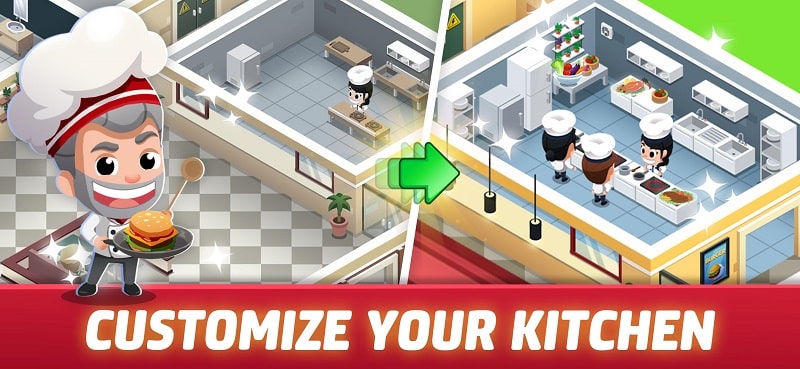
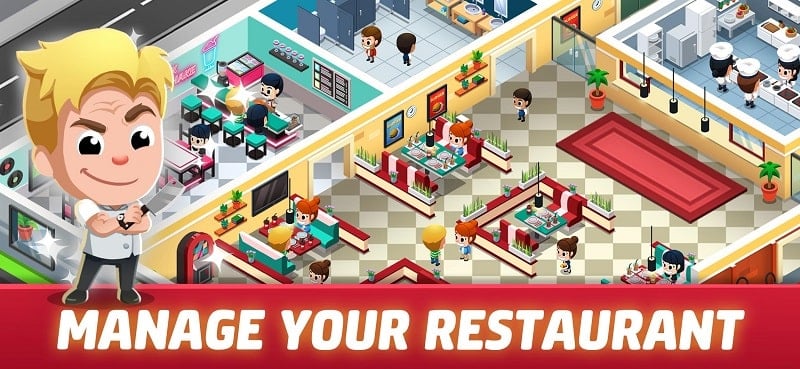
Staff assignments are central to strategy: chefs determine preparation speed and available recipes, waiters influence service cadence and tipping behavior, and managers deliver passive bonuses that streamline operations. Customization extends to decor, table arrangements and kitchen appliances that collectively influence customer satisfaction and the types of guests your restaurants attract. Thoughtful layout choices reduce bottlenecks and can change which promotions or appliance upgrades deliver the best return on investment.
Visual Style and Audio
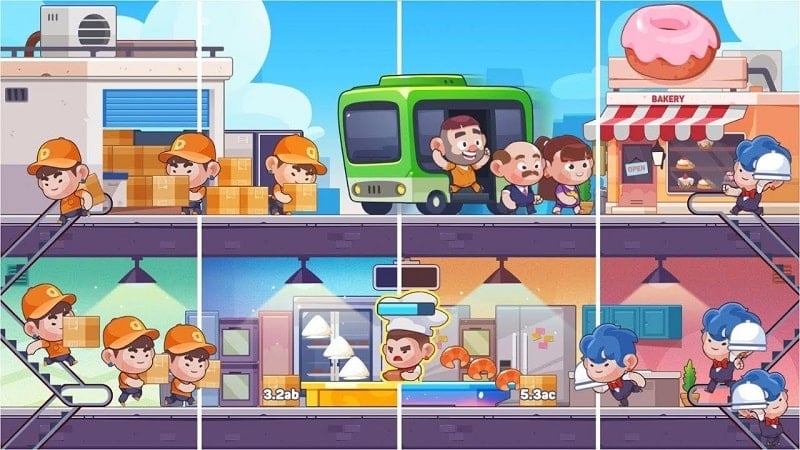
The visual approach favors bright, readable chibi-style 3D characters and clean, easy-to-scan environments so you can assess crowding and status at a glance on smaller screens. The art remains cheerful and communicative rather than hyper-realistic, which supports quick decision-making. Background music and subtle sound cues reinforce the relaxed atmosphere and provide useful feedback for events such as order completion, completed upgrades or a sudden customer rush, without becoming intrusive during longer sessions.
Offline Play and Replay Value
One of the strengths of Idle Restaurant Tycoon is its offline progression model: income continues to accumulate when the app is closed so occasional logins yield meaningful gains. Replay value comes from experimenting with different upgrade pathways—prioritizing menu diversity versus seating expansion—or optimizing staff promotions for specific restaurant types. Branch expansion and the gradual increase in complexity create long-term objectives that encourage players to revisit older locations with new strategies.
User Experience and Accessibility
The user interface is designed for clarity with prominent displays of income per minute, current restaurant rating and upgrade costs so players don’t need to dig through nested screens to make informed choices. Accessibility options include adjustable audio volume, legible font sizes and generous touch targets to accommodate a wide range of devices and dexterity levels. In-game tooltips and contextual help explain mechanics step by step, making the game approachable for novices and comfortable for experienced players looking to fine-tune efficiency.
Challenge Modes and Player Goals
Optional challenges and timed events add variety without disrupting the core idle experience: modifiers might accelerate customer arrivals, lower patience timers, or impose themed objectives that shift upgrade priorities. Participation is never mandatory, so these modes serve as concentrated tests of efficiency for players seeking short-term goals or higher rewards. Overall, Idle Restaurant Tycoon offers an approachable simulator with room for thoughtful optimization, steady progression and satisfying passive growth.
Show More