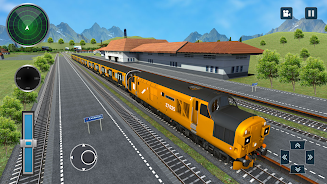
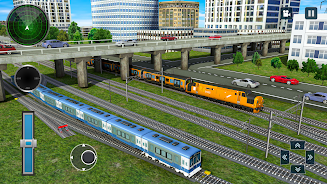
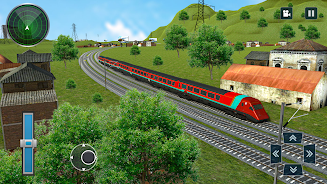
Modern Train Simulator Game
Version:1.1.1
Published:2026-10-12
Introduction
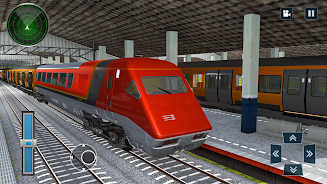
Modern Train Simulator Game puts you in the engineer's seat with realistic locomotive behavior, detailed route environments, and a focus on authentic operational challenges. Modern Train Simulator Game balances accessible controls for newcomers with deep systems for enthusiasts: you will manage timetables, respond to signals, and adapt to changing weather while learning the nuances of diesel, electric, and steam traction. The introduction and tutorial get you started quickly, while the simulation depth is there when you want to refine braking profiles and master long-haul assignments.
Overview of the simulation experience
This simulator centers on route knowledge and procedural operation rather than arcade-style driving. Each run begins with a route sheet summarizing scheduled stops, target speeds, and special cautions. Routes range from short commuter legs that train punctual station stops to extended freight runs that require load-aware braking and energy management. Environmental factors like gradients, wind, rain, and night conditions change how your locomotive behaves and how you plan each journey, giving each assignment a clear operational purpose.
Gameplay mechanics and in-cab systems
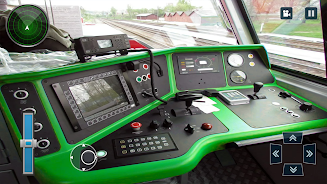
Handling is grounded in tangible systems: throttle response, traction control, and realistic brake modeling create a driving feel where speed, weight, and gradient matter. Gauges and indicators report air brake pressure, engine output, and signal states so you can monitor performance at a glance. Signal systems and speed limits are integrated into route planning, and optional overlays highlight upcoming restrictions to help you learn their meaning. The game supports assisted driving aids for early learning, while a full manual mode removes automation for players who want an undiluted simulation experience.
Controls, accessibility, and learning aids
Controls are designed for mobile play with multiple input styles including touch panels, a virtual throttle and reverser, and simplified tap-to-brake shortcuts for casual sessions. Customizable control layouts let you move frequently used controls to comfortable positions, and sensitivity settings accommodate different device sizes. New players can rely on an interactive tutorial that walks through basic operations and signal interpretation, and accessibility options such as HUD scaling, color-contrast settings, and adjustable text sizes help make the interface usable for a wide audience.
Customization, upgrades, and progression
Progression in Modern Train Simulator Game is career-oriented: consistent punctuality, incident-free runs, and completion of mission objectives yield rewards that unlock new routes and locomotives. Customization is both cosmetic and mechanical. You can apply liveries and cabin trims for visual variety and install performance upgrades that affect braking behavior or traction under load. Tuning options like brake profile adjustments and weight distribution tweaks allow players to tailor handling characteristics to preferred playstyles without breaking the core simulation balance.
Visual style and performance tuning
Visuals emphasize clarity and performance over photorealism so the game runs smoothly across a broad device range. Textures, lighting, and particle effects such as steam and rain are scalable, and settings let you prioritize battery life or fidelity by adjusting draw distance and motion effects. Camera options include close-up cabin views for instrument reading and wider external perspectives for scenic appreciation, and the lighting model supports realistic sunrise, midday, and night conditions that affect visibility and ambiance.
Level structure, challenges, and offline play
Levels are organized by route and scenario complexity, beginning with short, forgiving commuter assignments and progressing to long-haul freight operations with tighter margins and varied weather. Daily and weekly challenge scenarios encourage focused practice on braking, punctuality, or energy-efficient driving, and many core features including the tutorial, primary career mode, and most routes are fully playable offline so you can run practice sessions without a network connection. Challenge timers and local score tracking provide measurable goals even when you’re offline.
Replay value, scoring, and community features
Replayability grows from the combination of varied route design, vehicle roster differences, and mission-driven objectives that reward consistency and precision. Players can chase personal bests for punctuality and incident-free runs, and optional competitive elements such as leaderboards and time-limited challenges give additional motivation for improvement. Regular updates expand the route library and add quality-of-life enhancements, keeping the experience fresh over time.
Getting started and installation notes
After installing Modern Train Simulator Game, begin with the guided tutorial and a short route to become comfortable with controls and signal interpretation. If you experience frame drops, lowering visual settings or reducing draw distance will improve performance. Keep an eye on release notes for route additions and balance tweaks, and use the in-game training scenarios to refine braking distances and learn how weather and gradients affect your runs.
Show More