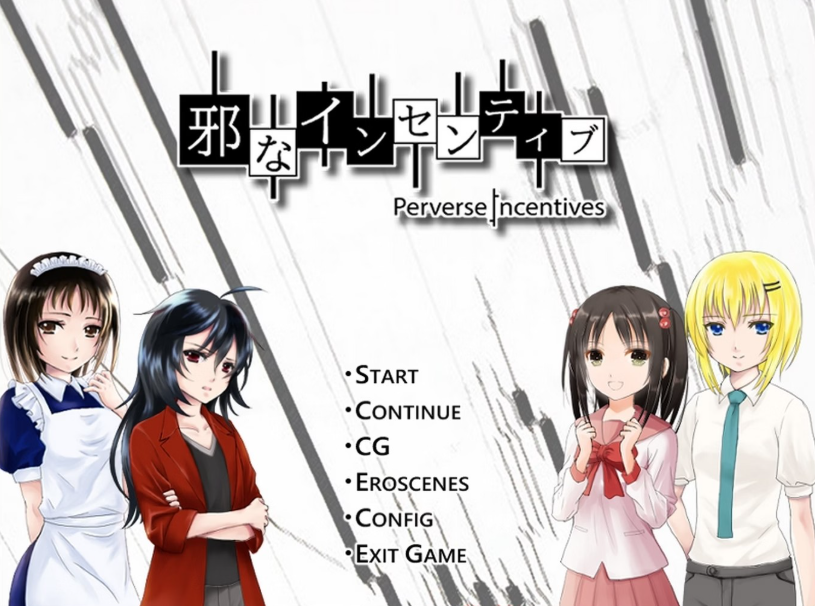
Perverse Incentives
Version:Final
Published:2026-10-13
Introduction
Perverse Incentives is a tactical puzzle game that turns the idea of rewards on its head, forcing players to manipulate systems and exploit trade-offs to progress. It blends dark humor with deep strategic puzzles, offering a compact single-player experience where every choice carries unexpected consequences.
Quick look at the premise
At its core, Perverse Incentives challenges players to achieve objectives by bending rules and incentivizing behaviors in simulated environments. Levels are defined by clear goals, but the means to reach them reward creative thinking rather than brute force. The design encourages experimentation: pathways that look counterintuitive often lead to elegant solutions.
Core mechanics and strategic depth
The gameplay loop revolves around setting up systems and watching how agents respond. You don’t directly control characters; instead you place incentives, barriers, and triggers that alter NPC decisions. This indirect manipulation creates a layered puzzle experience. Timing, sequence, and resource placement matter, and the game rewards players who spot emergent interactions between game elements.
Progression, levels and variety
Perverse Incentives features a mix of short scenarios and longer campaign stages. Early levels present straightforward dilemmas to teach the underlying rules. Mid-game content ramps up complexity with multi-stage objectives and competing incentives. Later stages demand long-term planning and often require reversing established patterns to unlock a solution. Replayability comes from multiple viable strategies and hidden solutions embedded in each map.
Systems you’ll learn to exploit
Several modular systems are central to how puzzles evolve:
- Earning and reward mechanics — balance positive and negative reinforcement to push NPCs toward desired actions.
- Flow and routing — control how agents move through the map with chokepoints and attractions.
- Conditional triggers — set up events that change rules mid-level, forcing adaptive strategies.
User interface and visual presentation
The interface is clean and functional. Icons are readable at a glance and the map editor highlights cause-and-effect relationships clearly. Art direction favors stylized, slightly sardonic visuals that match the game’s thematic tone without overloading the player. Animations are purposeful: a small flourish communicates state changes without distracting from strategy.
Audio and feedback
Audio design supports decision-making. Subtle sound cues indicate when incentives are active or when an agent’s behavior changes. They serve both as atmosphere and practical feedback during complex sequences, which helps prevent trial-and-error frustration.
Tips for players just starting out
Newcomers to Perverse Incentives will find it helpful to experiment in low-risk scenarios first. Try these approaches:
- Analyze agent priorities before placing incentives; understanding motivations reduces wasted moves.
- Use small tests — place a single reward and observe reactions before scaling up.
- Think in chains: a tiny nudge early can cascade into a complete solution later.
Common mistakes to avoid
Avoid overcomplicating setups. Adding too many overlapping incentives can create chaotic behavior that’s hard to debug. Instead, iterate on simple systems and expand once their outcomes are predictable.
Why players are drawn to it
Perverse Incentives appeals to puzzle lovers who enjoy lateral thinking and systemic play. The satisfaction comes from discovering non-obvious strategies and watching a carefully constructed incentive network produce the intended result. Social players also enjoy sharing clever solutions and speedrunning levels with alternative constraints.
Performance and device considerations
Technical demands are modest; the game runs smoothly on mid-range devices thanks to optimized 2D rendering. Load times are short, and save states make it easy to resume complex puzzles. Controls are suitable for touch screens and translate well to mouse input for desktop-like experiences.
Getting started
Begin with the tutorial to absorb the core concepts, then tackle a mix of short and long challenges to build intuition. Perverse Incentives rewards patience and observation. Expect to fail a few times, learn from those failures, and then enjoy the satisfying moment when an elegant chain of incentives collapses into success.
Show More