Shiftide Sharki
Version:0.1.5
Published:2026-10-13
Introduction
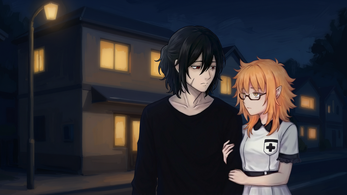
Shiftide Sharki places you in the shoes of a framed former mafioso who attempts to disappear into the rhythms of a small island town, and this editor introduction outlines what to expect from the SFW release of Shiftide Sharki for Android. The game blends narrative-driven dating sim elements with light RPG systems, letting you run a half-ruined hospital as a home base while you explore, build relationships, and play a variety of mini-games across a compact open map. The SFW build keeps the core character work and branching outcomes while avoiding explicit material, making the story accessible to a broader audience.
Key features
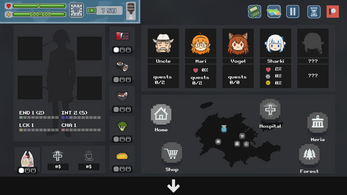
The title offers roughly five hours of combined main and side content that emphasize character interactions and incidental storytelling rather than long, repetitive travel. Expect eight distinct mini-games with upgrade paths, a consolidated home hub for property purchases and improvements, and simplified RPG elements such as character stats and relationship meters that influence branching dialogue. Property and hospital management weave into progression: cosmetic upgrades change how spaces feel, while functional purchases unlock new interactions and passive income that supports other activities.
Gameplay and controls
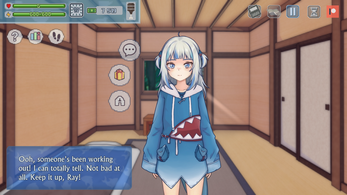
Gameplay centers on exploration, conversation, and short-form challenges. Controls are designed for touch-first play with optional simple controller support: point-and-tap movement, menu-driven inventory and purchase screens, and direct input for timing and skill-based mini-games. Dialogue trees present clear choices and visible relationship feedback so you can plan approaches to scenes, and portrait updates during conversations help signal emotional beats. The pacing balances leisurely exploration with bite-sized challenges that slot into short play sessions.
Progression and replay value
Progression ties together relationship growth, hospital income, and item-based upgrades. Building trust or affection with town residents unlocks extra scenes, alters later outcomes, and can reveal new quests or mini-games. Improving hospital facilities and buying property increase passive income and open up additional activities, while item upgrades make mini-games easier or introduce new mechanics. Multiple endings and branching events provide clear reasons to replay; the compact scope means several short playthroughs are practical for exploring alternate relationship paths and different story outcomes.
Visual style and level structure
The visual presentation favors character-driven scenes with expressive portraits during key conversations and tidy overhead or side maps for island navigation. Interiors—homes, shops, and the hospital—are distinct and decorated with items that reflect your customization choices. Level design is intentionally modular: a small island divided into neighborhoods and activity nodes encourages short exploration runs with explicit objectives rather than long treks, and modular areas support focused vignettes of interaction and discovery.
Customization and home management
Customization is integrated into both aesthetics and systems. Players can purchase and place furniture and functional objects—beds, appliances, decor, bicycles, and a home game console—to personalize spaces and unlock in-home activities. A home inventory system tracks purchases and placements so you can manage limited space and consider gameplay effects; some items indirectly influence visitor behavior or unlock access to certain mini-games. Cosmetic choices and strategic item placement both matter to progression and to the way NPCs respond to you.
Challenge systems and balance
Challenge comes from balancing time, money, and relationship priorities rather than punishing mechanics. Mini-games scale in difficulty through upgradeable mechanics and unlockable content, while hospital income and personnel management require occasional attention to keep a steady cash flow. The game keeps core systems approachable but offers optimization routes for players who enjoy squeezing efficiency from time and resources to reach alternate endings or maximize affection gains.
Accessibility, offline play and performance
Shiftide Sharki is designed for single-player offline play with a modest install size and performance profile suitable for a wide range of Android devices. The interface emphasizes readability, with options to adjust text size and input sensitivity to accommodate different players. Recent updates include localization improvements and performance optimizations to reduce load times and stabilize frame rates on lower-end hardware, and the developer continues to refine controls and translations based on community feedback.
Version information
The current 0.1.9v update refines dialogue portraits, speeds up affection gain for a specific character at higher relationship levels, adds a Rooms page for hospital management, and partially reworks doctor and income mechanics to smooth progression. Additional improvements include eleven new items, the home inventory system, adjusted purchasing mechanics, and an in-home game console that unlocks previously locked mini-games in their SFW form. Several bug fixes, performance tweaks, and translation updates are included, and the solo developer remains active in polishing the experience.
Show More