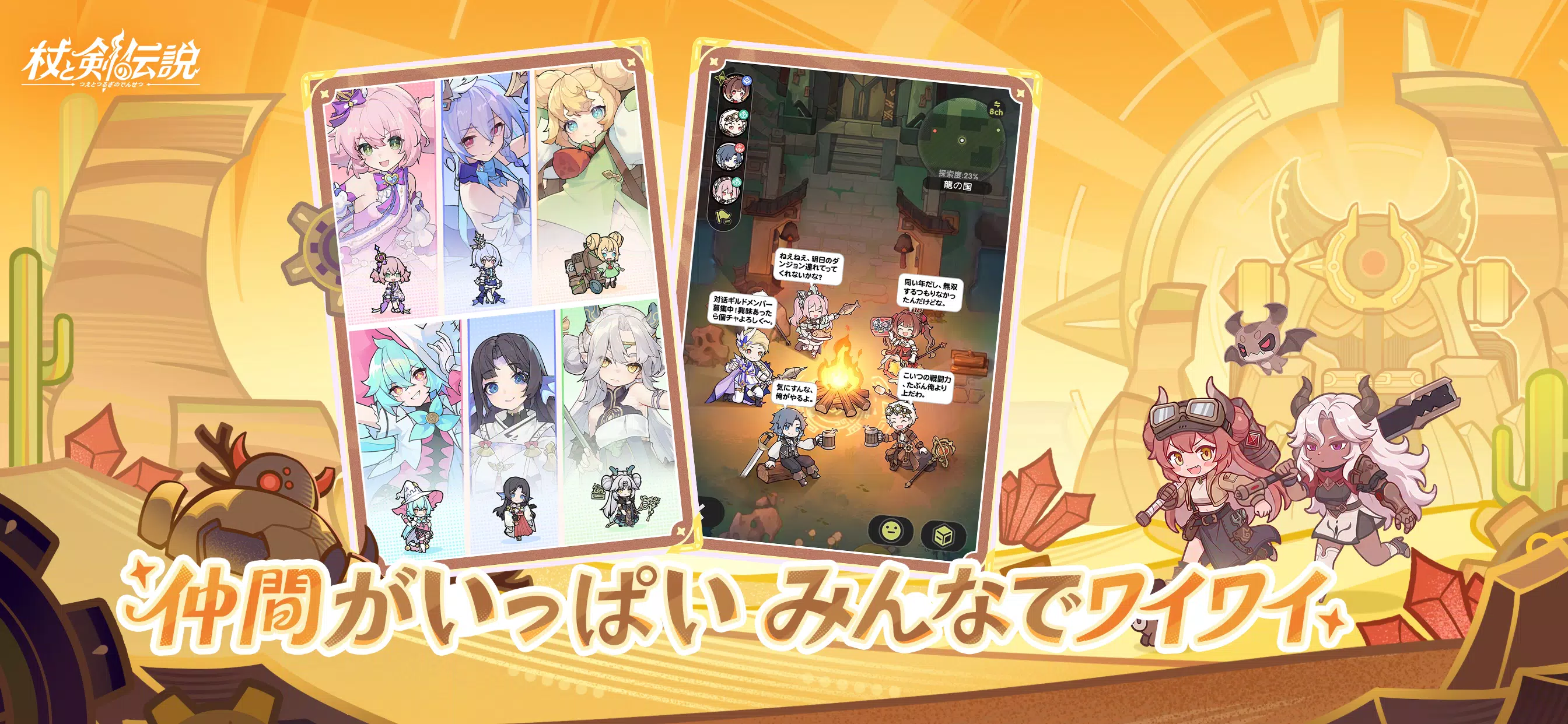
杖と剣の伝説
Version:1.0.0
Published:2026-10-14
Introduction
杖と剣の伝説 delivers a tactical action-RPG that places magical staff combat and close-quarters swordplay at the center of tightly designed dungeon fights. In the opening hours of 杖と剣の伝説 you assemble loadouts, learn timing windows for spells and strikes, and explore compact stages that reward both quick reactions and thoughtful preparation. The introduction walks players through core ideas without forcing dedication to a single playstyle, so newcomers can reliably experiment with hybrid builds early on.
World design and pacing
Levels in this title are deliberately compact but vertically and mechanically layered, encouraging repeated exploration to uncover shortcuts, hidden caches, and encounter variations. Early zones favor clear sightlines and manageable enemy groups so you can practice spacing with staff spells, while later areas introduce hazards and enemy modifiers that demand tighter coordination between ranged control and melee pressure. The pacing keeps each run focused and varied: some rooms require swift, reflexive play, while others reward methodical positioning and resource conservation.
Core gameplay mechanics
The game’s dual-weapon system is its defining feature: staff abilities emphasize area control, crowd management, and utility buffs, while swords deliver fast combos, damage windows, and mobility options. A visible combo meter and shared cooldown pool create meaningful choices during engagements — deciding whether to expend mana for a crowd-clearing spell or reserve it for a clutch defensive buff changes how encounters resolve. Weapon affinities and casting delays are tuned so that hybrid builds feel distinct from pure caster or pure melee archetypes.
How encounters evolve
Enemy encounters are built around predictable telegraphs that escalate with modifiers and miniboss mechanics. Standard foes gain behaviors such as shielding, reflection, or rapid repositioning as you progress, which encourages rotation of tactics rather than relying on a single exploit. Boss rooms introduce layered phases and environmental elements that change safe zones and optimal approaches, requiring players to read patterns and adjust relics or equipment between attempts.
Progression and customization
Progression blends tiered equipment, a branching skill tree, and socketable relics that alter play in situational ways. New gear typically provides synergy options — for example, reducing cast time after a successful parry or adding a chance to apply slow on sword hit — rather than just offering larger raw numbers. The skill tree splits into offensive, defensive, and utility branches, enabling builds like a nimble battlemage, a support-oriented controller, or a tanky duelist. Relics are designed to change encounter flow and invite experimentation with limited inventory slots between missions.
Controls, accessibility, and user experience
Controls map cleanly to touch and controller inputs with readable on-screen indicators and customizable hotkeys, making the game approachable across device types. The interface prioritizes combat clarity: unobtrusive health and resource bars, clear cooldown icons, and contextual prompts help players focus on tactics rather than menus. Accessibility options include adjustable input sensitivity and visual contrast adjustments so players can tune the experience to personal needs. A short tutorial teaches core mechanics and gives practical scenarios for practicing combos and spell timing.
Visual style, performance, and device compatibility
The visual direction favors readable fantasy environments with distinct enemy silhouettes and spell effects that communicate threat and area of effect without overwhelming the screen. On mid-range devices the title maintains stable frame rates through optimized effects scaling, though dense rooms with many concurrent spells can create brief slowdowns on older hardware. The UI scales for different resolutions, and the overall presentation emphasizes combat legibility over flashy but distracting visuals.
Replay value and challenge systems
Replay value arises from build variety, modular relic synergies, and encounter modifiers that shift enemy behavior. Challenge modes present remix variants of levels with added constraints or buffed foes, encouraging players to swap gear and experiment with new combinations. Cooperative play is supported for those who prefer shared tactics: pairing a staff-focused player to control space with a sword specialist who pressures single targets produces complementary strategies without requiring precise role specialization.
Practical tips for new players
Early experimentation pays off: try several staff and sword pairings to find synergies, pay attention to telegraphs on minibosses, and rotate relics to counter new modifiers. Prioritize one branch of the skill tree at first to create clear short-term goals, then diversify as you gather gear that supports hybrid strategies. With its balance of depth and accessibility, 杖と剣の伝説 rewards players who enjoy refining tactics, learning enemy patterns, and assembling builds that shift the feel of each encounter.
Show More