Alone With My Teacher
Version:0.13.0
Published:2026-10-14
Introduction
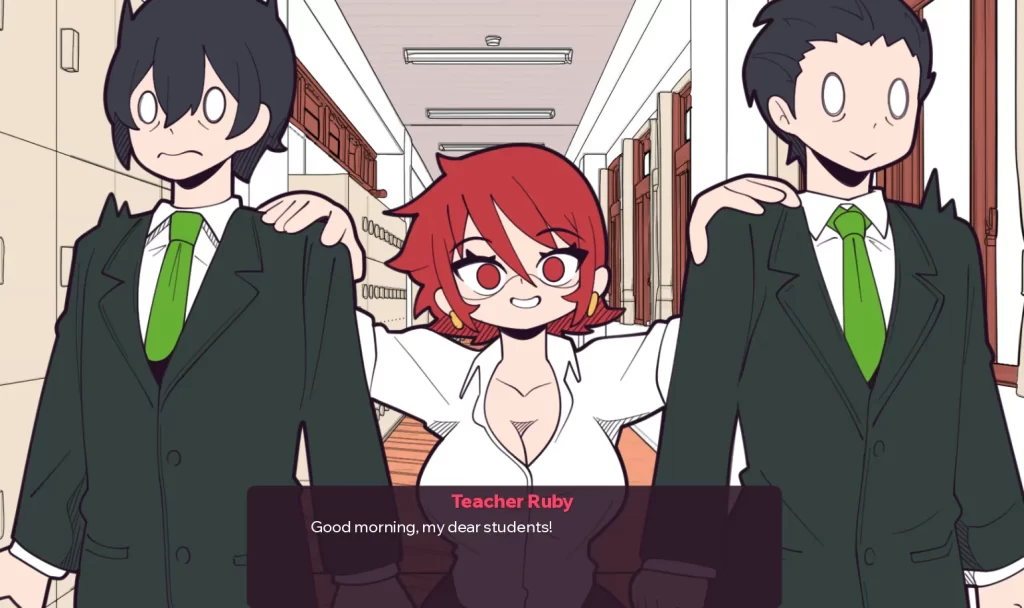
Alone With My Teacher is a narrative-driven interactive experience aimed at mature players, placing you in a professional mentorship and continuing-education environment where adult characters and choices shape relationships and outcomes. The game emphasizes decision-making, interpersonal dynamics, and episodic storytelling rather than explicit material; every branch grows from dialogue choices, timed interactions, and short gameplay moments that reveal new plot threads and character development.
Core gameplay
The core loop blends branching dialogue with concise gameplay segments that test timing and attention rather than reflex speed. Scenes are divided into episodes: choose dialogue options, complete brief interactive sequences, and resolve light puzzles to advance. Decisions have measurable and sometimes delayed consequences, opening new scenes or closing off routes in later episodes. The pacing supports both short sessions—advance a few key scenes to make meaningful progress—and longer playthroughs that explore side events and character backstories.
Characters and progression
All characters in Alone With My Teacher are adults involved in a workplace-style mentorship or a structured training program. Relationships are tracked by visible meters and underlying variables so you can see how your actions influence trust, rapport, and professional standing. As affinity rises, new dialogue nodes, optional scenes, and alternative endings become available. Progression is tied to story milestones and task-oriented objectives: completing practical challenges, attending scheduled events, and managing priorities unlock deeper arcs and exclusive narrative content.
Mechanics and challenge systems
Mechanically, the game rewards careful observation and strategic planning. Manage limited in-game time and a small set of resources to pick which encounters to pursue and when to revisit locations. Mini-challenges focus on pattern recognition, dialogue timing, and contextual decisions instead of action-heavy sequences. These tests are short but meaningful, designed to encourage experimentation: use save slots to test different tactics, compare outcomes, and refine your approach across multiple runs.
Environments and structure
The structure is guided and episodic rather than open-world. Action takes place across a collection of indoor and outdoor locations tied to a professional facility and adjacent community spaces intended for adult participants. Each environment hosts unique interactions—office meetings, training rooms, cafés, and communal areas—where presence of characters or timing of visits can trigger special events. Returning to a location after unlocking new information often reveals hidden conversations or collectible items that shift relationship meters and narrative direction.
Visuals and audio design
The visual style favors expressive character art and a clear, readable interface over photorealism to keep attention on dialogue and choice consequences. Backgrounds support mood and scene context while UI design highlights objectives, meters, and interactive elements. Audio uses ambient environmental layers, a curated soundtrack, and selective voice snippets to enhance immersion; sound cues also serve as gameplay signals to indicate timing windows or reveal subtle narrative hints.
Controls and accessibility
Designed for touchscreen devices, controls are simple and intuitive: tap to advance text, swipe to navigate scenes, and use clear icons for interaction points. The interface keeps critical information—current objectives, relationship meters, and available choices—visible without clutter. Accessibility features include adjustable text size, high-contrast color options, and sensitivity settings to accommodate a range of devices and player needs, making the story approachable for new players and comfortable for those who need visual adjustments.
Performance, compatibility, and offline play
The app is optimized for a broad range of Android phones and tablets with toggles for graphic quality and sound detail to suit older hardware. Asset optimization reduces memory usage and keeps load times between scenes short. Core single-player content can be played offline, allowing uninterrupted progress through the narrative without a constant connection. Regular updates focus on compatibility with recent Android releases and stability improvements.
Customization and replayability
Customization centers on cosmetic options and selectable dialogue tones that shape character responses subtly rather than changing core mechanics. Replayability is supported by multiple dialogue paths, character-focused side events, and collectible scenes that require different choices to access. The visible relationship tracking combined with hidden variables encourages multiple playthroughs: small decision changes reveal new scenes and alternative endings that make each run feel distinct.
Getting started and player guidance
After installing Alone With My Teacher, begin with the tutorial chapter to learn controls, relationship meters, and mini-challenge timing. Use multiple save slots to experiment with different strategies and consult the in-game log to track unlocked scenes and notes. Practical tips: prioritize a few key relationships per run, revisit locations after new information appears, and adjust performance settings for older devices to maintain smooth play. This editor guide is meant to help players who enjoy choice-driven narratives, strategic decision-making, and character-led storytelling approach the game confidently.
Show More