Retro Garage
Version:2.17.0
Published:2026-10-15
Introduction
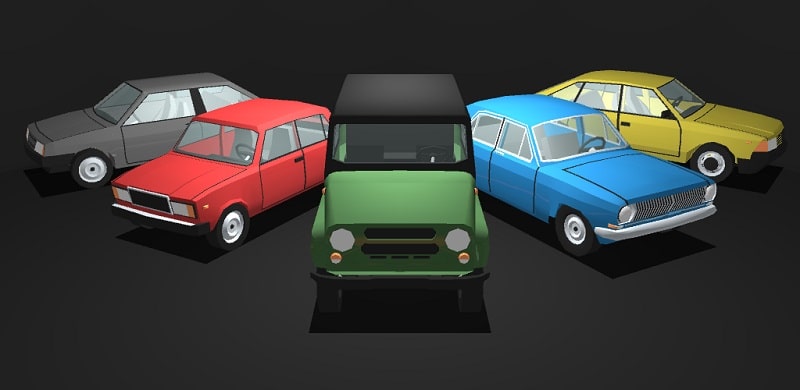
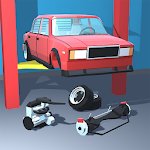
Retro Garage is a hands-on restoration simulator focused on classic USSR and European cars. Retro Garage places you in a period-correct workshop, and Retro Garage tasks range from engine disassembly to final road tests, blending mechanical work and period-accurate driving.
Overview
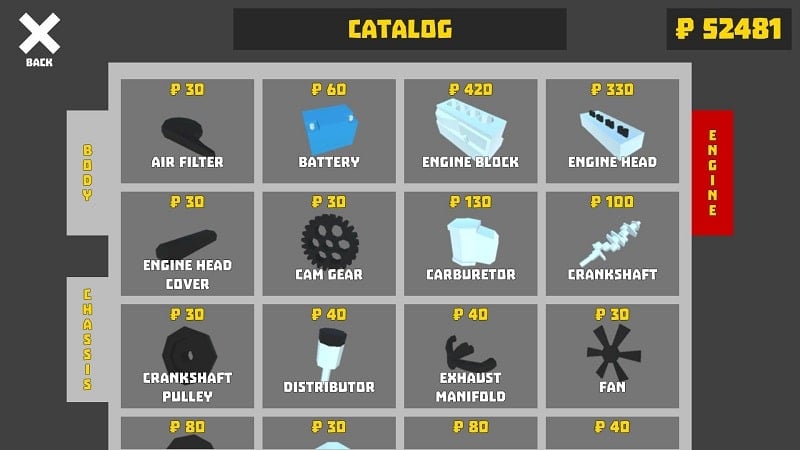
In Retro Garage you recreate the whole restoration cycle: inspection, disassembly, repair, reassembly and road-testing. The game emphasizes realistic mechanical procedures rather than arcade shortcuts, so you will diagnose faults, source appropriate parts and apply era-correct repair techniques. Each vehicle arrives with its own history and condition, which affects how much work is required and which skills you must prioritize.
Gameplay and Controls
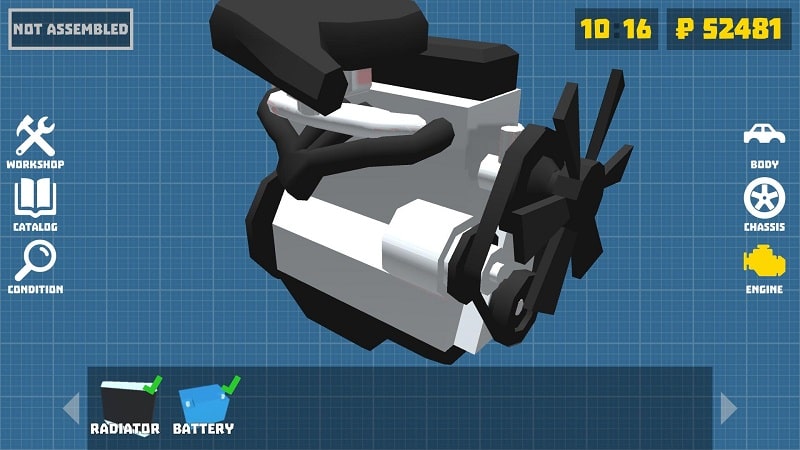
Gameplay in Retro Garage is built around intuitive touch and gesture controls that simulate workshop tasks. Use drag-and-drop to remove parts, pinch or rotate to examine components from different angles, and tap to select tools and perform actions like unbolting, filing, welding or tuning. A precision mode slows down animations for fine operations and helpful on-screen prompts explain tool use while you learn. Driving sections use simple steering and throttle inputs with optional automatic or manual shifting, allowing you to feel the handling quirks of vintage vehicles without complex driving sims interfering with the restoration focus.
Repair Mechanics and Challenge Systems
The repair mechanics combine realistic steps with approachable gameplay loops. You will strip engines into subassemblies, test electrical systems, straighten body panels and renew interiors using period-appropriate parts. Challenges are presented as restoration jobs with objectives and optional secondary goals such as minimizing cost, restoring to concours condition or tuning for better rally performance. Time-limited jobs and condition-based objectives add replayable hurdles that reward careful planning and efficient workshop workflows.
Progression and Workshop Management
Progression is skill-driven: as you complete projects you improve mechanical proficiency, unlock new repair techniques and gain access to higher-quality parts and rarer cars. Workshop upgrades let you expand your bench, acquire specialized tools and increase storage for parts. Reputation with clients grows when you deliver well-restored vehicles, and that reputation unlocks more complex projects. The system favors thoughtful progression rather than grinding, encouraging players to practice specific techniques and tackle increasingly intricate restorations.
Customization and Tuning
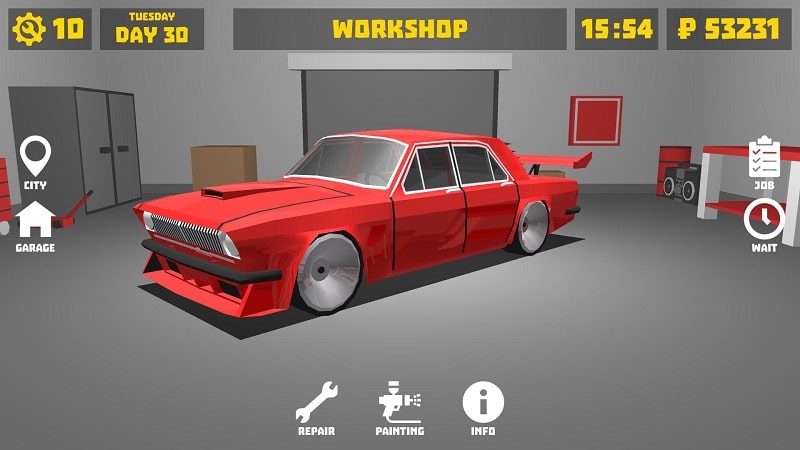
Retro Garage supports visual and mechanical customization without breaking historical authenticity. You can choose period-correct paint schemes, fit era-appropriate accessories, and adjust engine tuning, suspension settings and gearing to influence driving behavior. Customization affects both aesthetics and performance, so tuning choices matter for the driving challenges that follow each restoration. Cosmetic options allow players to create a coherent look that reflects the vehicle’s era while keeping parts and upgrades believable.
Visual Style and Sound
The presentation aims for a nostalgic, authentic atmosphere: interiors and engine bays are modeled with visible wear and era-specific details, materials respond to light in close-up workshop views, and the UI evokes classic automotive manuals rather than glossy modern HUDs. Audio design emphasizes mechanical sounds — rattles, carburetor burbles, and the clank of tools — paired with restrained period music and ambient workshop noise to enhance immersion without drawing attention away from hands-on tasks.
Level Structure and Offline Play
Each restoration is a self-contained project with clearly defined stages: initial assessment, parts procurement, hands-on repair, reassembly and final testing. Between projects you manage the workshop and prepare for the next challenge. Retro Garage is designed for offline play so you can work at your own pace without requiring a constant connection; save files let you pause mid-restoration and return later without losing progress.
Replay Value, Accessibility and User Experience
Replay value comes from a combination of varied vehicle conditions, optional challenge goals and alternative tuning paths that yield different driving experiences. The game includes an adjustable difficulty curve, contextual hints for newcomers, and accessibility options such as larger UI scaling and control sensitivity adjustments to suit players with different needs. A built-in tutorial guides first restorations and introduces advanced techniques gradually to reduce the initial learning curve while preserving depth for committed players.
Who Will Enjoy Retro Garage
Retro Garage is aimed at players who appreciate authentic vehicle models, methodical mechanical work and a nostalgic atmosphere rather than high-speed arcade racing. Enthusiasts of classic motoring, learners curious about basic automotive engineering and anyone who enjoys step-by-step problem solving will find substantive content and steady progression. The game rewards patience and attention to detail with satisfying restorations that you can both admire in the workshop and test on scenic routes and driving challenges.
Show More