Love and Sex: Second Base
Version:24.6.0a
Published:2026-10-23
Introduction
Love and Sex: Second Base is a choice-driven dating sim about a geeky roommate living with two attractive women. Love and Sex: Second Base uses stat-based choices to guide relationships and romantic opportunities. Love and Sex: Second Base presents branching scenes where your decisions determine who you grow close to.
Key Features
This game emphasizes decision-making and character progression rather than fast action. The core loop revolves around conversation choices, everyday interactions, and targeted activities that raise specific stats to unlock new responses. The premise centers on a roommate dynamic with two main characters, but daily life encounters introduce a variety of secondary characters and side paths. Relationship meters track affection and trust, and a clear marriage path exists for players who steer their relationships toward long-term commitment.
Gameplay & Controls
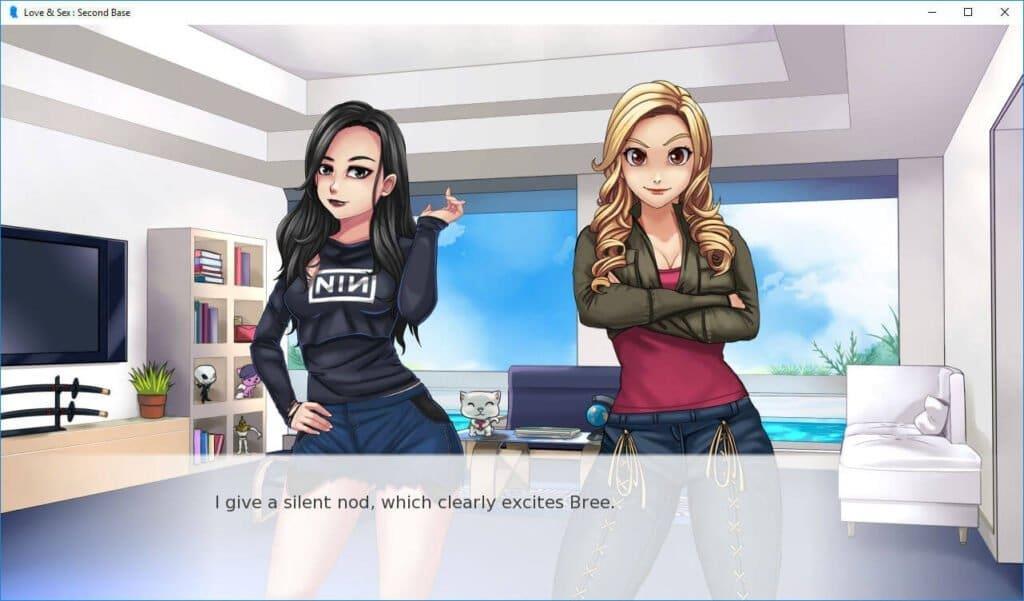
Gameplay is text-and-choice driven, presented in a visual-novel format with discrete scenes and decision nodes. Controls are simple and intuitive: tap or click to advance text and select dialogue options to react to events. Choices are often contextual and can open or close branches in the story depending on your current stats and prior decisions. The interface focuses on readable dialogue windows and portrait-focused character panels so interactions remain easy to follow on phones and tablets.
Progression & Stats
Progression relies on a small set of stats that influence which dialogue options and responses are available. Actions and scene outcomes award stat points or relationship adjustments that unlock new pathways, reactions, and exclusive scenes. The game uses a chapter/day structure where each episode presents goals and opportunities to develop skills or relationships. As stats improve, previously inaccessible responses become available, enabling deeper conversations and different outcomes, including more intimate encounters or marriage proposals depending on the route you follow.
Visual Style & Presentation
The presentation leans on character portraits, background art, and clean UI to support the narrative. Scenes are composed to emphasize character expression and situational context rather than complex animation, making it straightforward to read and follow. Dialogue boxes and character portraits are designed for clarity, and ambient music and sound effects are used sparingly to maintain focus on narrative choice. The overall visual direction helps the story play out clearly on smaller screens without overwhelming the player with unnecessary visual clutter.
Structure & Replay Value
Story paths branch based on key decisions and stat thresholds, which encourages replaying chapters to pursue different outcomes. Multiple endings reflect the range of relationship results you can reach—from casual romance to committed partnerships. The chapter-based progression lets players focus on short sessions or play through longer stretches, and replay value increases as you experiment with alternative responses and stat builds to unlock hidden scenes or different epilogues.
Customization & Player Agency
While the game centers on narrative choices rather than deep character creation, it offers meaningful agency through dialogue and decision patterns. You personalize the experience by choosing how your character reacts, which relationships to pursue, and which stats to prioritize. Those decisions change how characters respond, which scenes you see, and ultimately the outcomes available at the end of each story arc, allowing for a tailored narrative experience on subsequent playthroughs.
User Experience & Accessibility
The interface aims to be accessible and easy to navigate with clear text, readable fonts, and an uncluttered dialogue flow. Text speed and auto-advance options help players tailor pacing, and the game presents choices in a straightforward format so new players can learn mechanics quickly. Designed for single-player, offline play, the title does not require a persistent connection and preserves progress locally so you can pick up where you left off.
Challenge Systems & Structure
Challenges arise through decision consequences and stat gating rather than reflex-based difficulty. Certain opportunities require a minimum level in one or more stats, encouraging strategic planning about which activities to pursue. The pacing of challenges and rewards is balanced to encourage experimentation: early choices guide direction, but later scenes can still be unlocked by changing focus and trying different approaches on repeat runs.
Advantages
Strengths include a focused, accessible set of mechanics that reward thoughtful play, a character-driven premise that creates engaging social dynamics, and clear objectives for players who want to pursue romance or longer-term relationships. The branching structure and stat-based unlocks provide satisfying feedback as you see how choices alter story paths.
Disadvantages
Mature themes and suggestive content mean the game is intended for adult audiences and may not suit everyone. The experience is tightly focused on relationship and romantic progression, so players seeking broader gameplay variety or competitive systems may find the scope limited. The narrative-driven design prioritizes choices and dialogue over complex mechanics or action-oriented features.
Show More