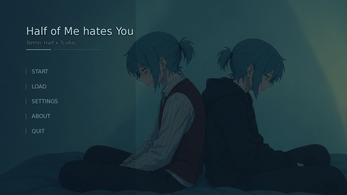
Half of Me hates You
Version:1.0
Published:2026-10-25
Introduction
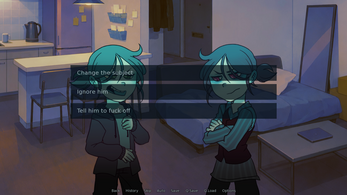
Half of Me hates You is a quirky narrative-driven indie game that blends puzzle encounters with emotional storytelling. Players alternate between two contrasting halves of a protagonist, solving environmental challenges while uncovering memories and choices that shape the character’s fractured identity across richly staged scenes.
Quick overview
Half of Me hates You places emphasis on duality: each half of the character has unique abilities and perspectives. The title focuses on short, self-contained chapters where exploration and decision-making influence both immediate outcomes and long-term narrative threads.
Core gameplay mechanics
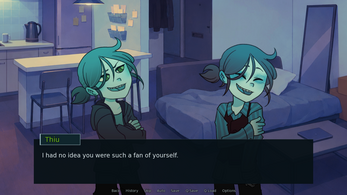
At its heart the game alternates control between two personas. One half excels at analytical tasks—manipulating objects, spotting hidden mechanisms, and planning—while the other reacts emotionally, unlocking conversation paths, improvising in tense moments, and accessing different areas through impulsive choices. Swapping between halves is the primary mechanic, and mastering when to switch is essential to progress.
Levels, setting, and atmosphere
The environments are compact but densely packed with interactive elements. Levels range from claustrophobic apartments to dreamlike corridors that visualize memory fragments. Lighting, sound design, and art direction reinforce the sense of split perception, making exploration feel intimate and often unsettling in productive ways.
Characters and story structure
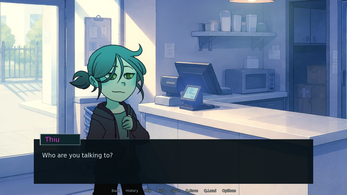
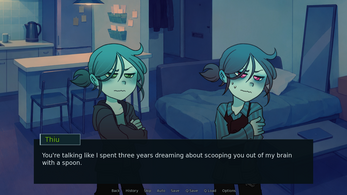
Beyond the playable halves, Half of Me hates You features a small cast of supporting characters whose dialogues branch depending on which persona interacts with them. The narrative unfolds episodically: early chapters teach mechanics while later ones combine puzzles with moral choices. Outcomes vary; some decisions resolve conflicts, while others deepen tension between the two halves.
Progression and replay value
Progress is checkpoint-based, with optional collectible fragments that reveal backstory. Multiple endings encourage replays since subtle choices alter character relationships and unlock alternate sequences. Speedrunners can focus on route optimization, while narrative players can take time to explore every dialogue thread.
Controls and user interface
Controls are intentionally simple: context-sensitive interaction buttons, a swap control to change halves, and a compact radial menu for inventory and notes. The interface keeps the screen uncluttered, allowing the artwork and environmental storytelling to take center stage. Mobile and tablet implementations adapt controls to touch with intuitive gestures.
Visuals and audio design
Rather than relying on flashy graphics, the game uses stylized visuals and muted palettes to emphasize mood. Sound plays a key role: subtle cues hint at hidden elements while shifting musical themes underscore the contrast between the halves. Together, art and audio deliver an emotionally consistent experience.
Practical tips for new players
- Observe before acting: Many puzzles reward careful observation—look for environmental contrasts that indicate which half can interact.
- Switch strategically: Don’t swap just to progress; use the timing of swaps to chain actions across scenes.
- Collect fragments: Optional items deepen the story and can change dialogue options later.
- Experiment with dialogue: Different responses unlock new solutions and sometimes alter puzzle parameters.
Performance and compatibility
The game is optimized for mid-range devices, with adjustable graphic presets for smoother frame rates on older hardware. Load times are short, and battery impact is modest thanks to efficient asset streaming. Cloud save support keeps progress synced across devices where available.
Why players are drawn to it
Half of Me hates You appeals to players who enjoy character-focused adventures that combine light puzzles with branching conversations. Its compact chapters make it approachable for shorter play sessions, while narrative depth rewards longer engagement. The balance between gameplay and introspective storytelling stands out in the indie scene.
Getting started
Installation is straightforward through standard app distribution channels. New players should expect a short tutorial that demonstrates swapping mechanics and core interactions. From there, the game gently expands scope while keeping each chapter manageable and meaningful.
Show More