Kunoichi Sensei
Version:0.0.1
Published:2026-10-29
Introduction
Kunoichi Sensei is a cheeky shinobi training game that puts focus, timing, and self-control at the center of short, bite-sized lessons. In this early build players move through a sequence of compact minigames that test memory sequences, precision taps, and split-second reflexes while responding to a demanding mentor whose light teasing becomes part of the exercise. Sessions are intentionally brief so that individual lessons feel like quick training drills; progress unlocks animated rewards that act as playful, non-explicit incentives to return and improve. This introduction covers gameplay, controls, progression, visual style, accessibility, and what to expect from version 0.0.1 by the developer NTRNoob.
Gameplay mechanics
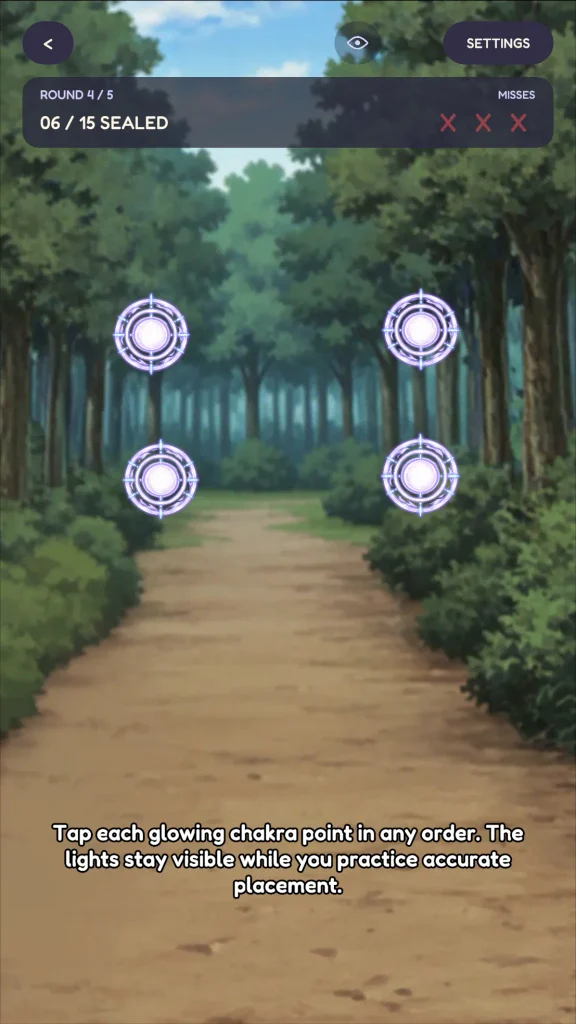
The core loop of Kunoichi Sensei centers on a variety of minigames designed to train discrete mental and motor skills. Memory drills ask you to recall ordered sequences of symbols or gestures. Precision challenges require careful timing and accuracy to hit small targets or follow a prescribed motion. Reflex tasks present sudden prompts that must be tapped or swiped within a narrow window. Each lesson is composed of several short stages that gradually increase in difficulty, introducing longer sequences, narrower timing windows, or faster reaction requirements. Performance is measured by accuracy, response time, and consistency rather than brute-force repetition, and the mechanics reward steady improvement and deliberate play.
Controls and user experience
Controls are touch-first and built for immediacy: taps register hits, short swipes register directional inputs, and simple hold gestures are used where sustained input matters. The interface provides clear visual and audio cues so you always know why a result occurred, and brief tutorials guide new players through the basic gestures before lessons begin. On-screen prompts and a responsive input system are tuned to feel fair on a variety of screen sizes, and settings allow you to adjust sensitivity and input tolerance to suit personal preferences and accessibility needs.
Progression and rewards
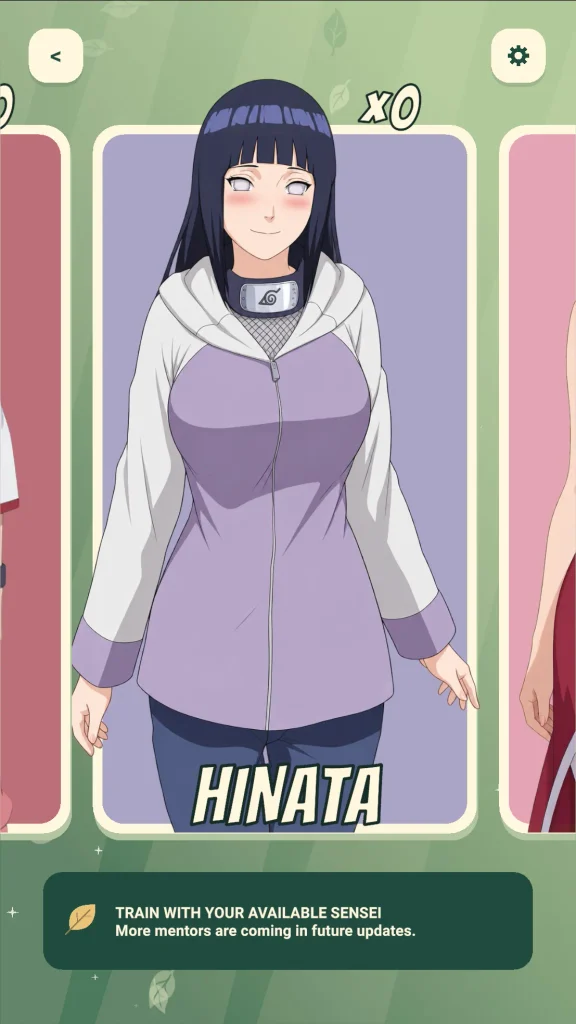
Kunoichi Sensei uses a measured progression system that unlocks content as you demonstrate improvement. Completing lessons and meeting target scores grants animated rewards and cosmetic variations of those rewards; these unlocks are intended as motivation rather than competitive prizes. A simple star or scoring metric tracks your best performances for each lesson so you can replay stages to achieve tighter accuracy or faster completion. The game saves progress locally so you can train offline, and future updates are planned to add more lessons and additional mentor characters to expand variety and challenge.
Visual style and audio
The presentation leans on an anime-inspired aesthetic with clean character art and expressive mentor animations. Backgrounds are intentionally minimal during drills to focus attention on the task, while the mentor character uses varied facial expressions and short voice snippets to convey encouragement or teasing in a non-explicit way. Sound design emphasizes informative cues—clicks, chimes, and subtle rhythmic elements—that help players lock into timing patterns. All audio and visual elements are adjustable or muteable in settings to tailor the experience to your environment.
Accessibility, settings, and offline play
The design includes options intended to improve accessibility and comfort: adjustable text size, high-contrast UI modes, toggles for vibration feedback, and a single-touch mode that reduces complex gestures for users who prefer simplified control. Subtitles or text equivalents are available for short voice lines, and a low-power mode reduces visual effects to conserve battery during portable play. Because Kunoichi Sensei stores progress locally you can practice lessons offline without requiring a network connection.
Level structure and replay value
Lessons are structured into short micro-stages to make training easy to fit into spare moments. Each stage focuses on one mechanical skill and can be replayed with slight randomization to prevent rote memorization; memory sequences, for example, will vary elements while keeping overall difficulty consistent. Replay value comes from chasing higher accuracy ratings, tightening timing windows, and unlocking additional animated rewards; the iteration loop is meant to encourage deliberate practice rather than grind.
Development, known limitations, and version notes
Developed by NTRNoob, Kunoichi Sensei is currently at version 0.0.1 and represents an early release with core lessons, mentor interaction, and unlockable animated rewards. Expect a limited set of lessons and mentors at launch along with the occasional rough edge or minor bug typical of an initial build. The team plans to expand lesson variety, add new mentors, and refine controls and accessibility based on player feedback. Kunoichi Sensei aims to evolve into a focused training app where short, repeatable sessions help players improve specific skills while enjoying a character-driven presentation.
Show More