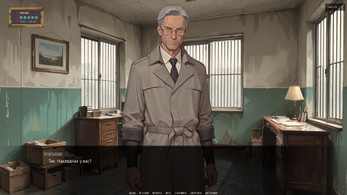
Don't Ask
Version:0.2.1
Published:2026-10-29
Introduction
Don't Ask is a tense, decision-driven mobile game that blends social deduction with quick reflexes. Players face morally ambiguous choices, deceptive opponents, and layered objectives across short rounds that reward observation, bluffing, and timely actions in a compact, replayable package.
What the game is about
Don't Ask drops you into scenarios where every decision matters. Each match presents a group of characters with hidden roles and conflicting goals. Your mission might be to gather information, protect a secret, or expose a liar, depending on randomized objectives. Matches are fast-paced and designed for short sessions that still deliver strategic depth.
Core gameplay mechanics
At its heart, Don't Ask uses a blend of deduction and action. Players receive partial information and must interact with others while managing timers and limited abilities. Rounds proceed through phases: information gathering, confrontation, and resolution. Success depends on interpreting subtle behavior cues, using abilities to confirm suspicions, and choosing when to commit to a risky play.
Key systems and player roles
The game organizes players into asymmetric roles. Some characters are investigators who collect clues, while others have sabotage abilities or defensive options. Roles are balanced so no single strategy dominates; even support roles can sway outcomes through well-timed interventions. Role reveal mechanics and conditional win states add tension and keep players guessing.
Maps, environments, and pacing
Levels in Don't Ask are compact but intentionally crowded with interactive elements. Environmental objects can be used to hide evidence, set traps, or create distractions. Maps are crafted to support both stealthy approaches and open confrontations, with multiple routes and sightlines that reward map knowledge and adaptive play.
Controls and user interface
Controls are optimized for touchscreens with context-sensitive buttons and swipe gestures for quick interactions. The HUD keeps critical information visible without overwhelming the screen: timers, role indicators, and available actions are laid out for fast parsing. New players benefit from a guided tutorial that demonstrates basic maneuvers and role interactions.
Strategy tips for competitive play
- Observe patterns: Watch how opponents move and interact; repeated behavior often indicates role tendencies.
- Play the long game: Don’t expose your strongest ability too early—save surprises for pivotal moments.
- Use environment: Leverage map features to corroborate or contradict testimonies.
- Coordinate subtly: If teaming is allowed, nonverbal signals and indirect cooperation can be safer than explicit alliances.
Visuals and audio design
Don't Ask favors clarity over flash. The art style emphasizes readable silhouettes and color-coded cues that convey role information at a glance. Ambient audio and tension-building effects aid immersion, while sound cues provide important in-game feedback like ability activations or nearby interactions.
Performance and compatibility
The game runs smoothly on a wide range of devices thanks to scalable graphics settings and efficient networking code. Frame rate consistency is prioritized for competitive fairness. Players with lower-end hardware can lower visual fidelity to maintain responsiveness without losing critical gameplay information.
Progression and customization
Progression is driven by unlockable roles, cosmetic items, and modest meta-goals that encourage experimentation rather than pay-to-win advancement. Skins and emotes allow players to personalize characters, while new roles and maps arrive through updates to keep the meta evolving.
Getting started
Newcomers should begin with tutorial matches and practice against bots to internalize basic role interactions and map layouts. After a few rounds, jump into ranked or casual matches to test strategies in human games. Regularly review post-match summaries to track where decisions led to victory or defeat.
Why players keep returning
Don't Ask delivers repeatedly tense encounters where no two matches feel the same. The blend of social deduction, reactive tools, and environmental tactics creates a layered experience. Players who enjoy mind games, bluffing, and short competitive rounds will find the loop both engaging and satisfying.
Show More